

The lower-cost option isn’t always the one with the lower caller rate. When comparing hiring a virtual assistant cold caller vs a professional agency, consider the full workload: preparing records, training callers, managing calls, and reviewing leads. A virtual assistant may suit an investor ready to handle those tasks; an agency may be a better fit for someone who wants support with more of the calling operation.
It’s easy to focus on labor costs, but the time you spend setting up and managing the work matters too. The right choice depends on your budget, how involved you want to be, and whether you already have a calling process in place.
This article breaks down the cost drivers, the trade-offs in fit, and what can affect the time it takes to get started. For a service quote, the price depends on the case and is provided after a quote request; scope, calling hours, records, and management needs shape the comparison. You’ll come away with a clearer basis for choosing the setup that fits your operation.
Key Takeaways
- Compare the full cost of calling, including the time spent hiring, training, managing, and reviewing leads, not just the caller’s rate.
- A virtual assistant can suit investors who are ready to manage the calling process; an agency can fit those who want more of the operation handled.
- Getting started depends on practical setup work, such as preparing records, call scripts, and a process for tracking results.
- Set your priorities first: budget, management time, lead quality, and how quickly you need a calling operation in place.
- For real estate cold calling with dedicated callers and recorded seller lead qualification, consider whether Lead Genie Outsourcing fits your workflow.
Hiring virtual assistant cold caller vs professional agency
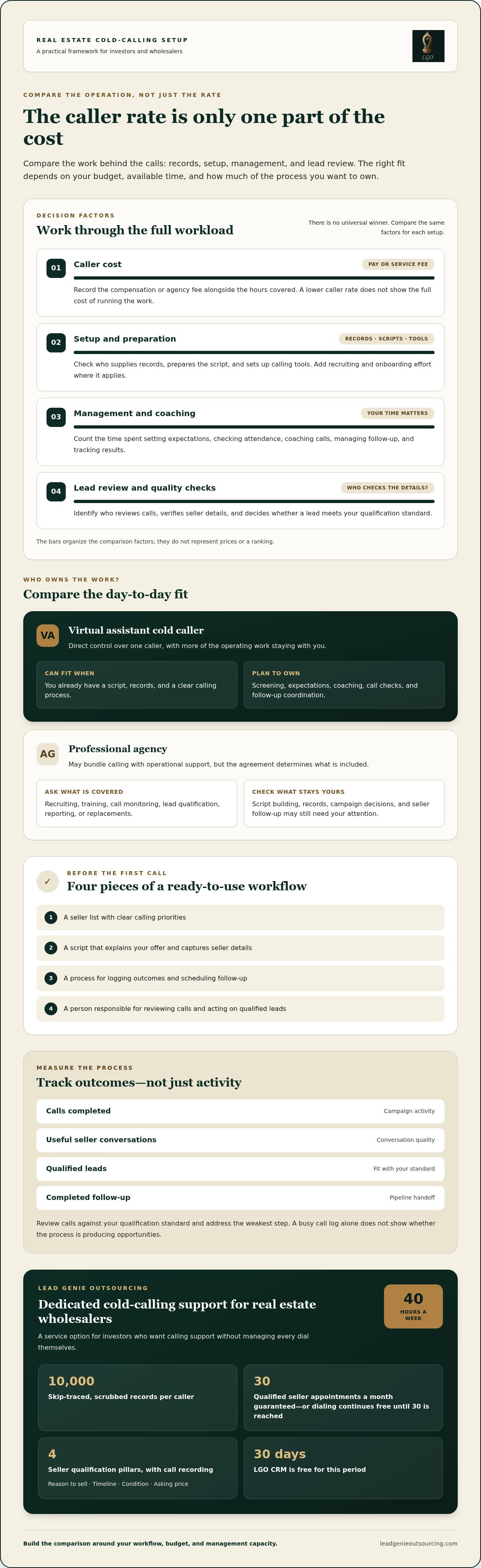
The choice between hiring a virtual assistant cold caller and a professional agency comes down to who runs the calling operation. A VA gives you direct control over one caller. An agency may bundle calling with recruiting, training, oversight, or lead review. Compare the work included, not just the caller’s rate. The lower rate can still cost more if you supply every tool, build every process, and manage each call yourself.
Start with a full cost list. Include caller compensation, recruiting time, onboarding, records, calling tools, management, and quality checks. Add only costs that apply to your setup. For example, a VA’s quoted rate may not include the hours you spend screening candidates or coaching missed objections. An agency’s fee may cover some operational tasks, but the agreement determines which ones. Put both options into the same checklist before comparing totals.
- Caller cost: Record the pay or service fee and the hours covered.
- Setup: Note who supplies records, scripts, and calling tools.
- Management: Count the time spent coaching, reviewing calls, and tracking follow-up.
- Lead review: Identify who checks seller details before they reach your pipeline.
A VA often fits an investor who already has a script, records, and a clear call process. You can give direct feedback after hearing a call and adjust the talk track yourself. That control comes with daily work. You’ll need to set expectations, check attendance, coach call handling, and keep follow-up moving. If you already manage callers or have a team lead, those tasks may fit your current workflow.
An agency may suit an investor who wants outside support around the caller. Ask what its service actually covers: recruiting, training, call monitoring, lead qualification, reporting, or replacements. Don’t assume every agency includes the same pieces. Compare the scope line by line. If an agency handles call review while you still build the script and manage follow-up, your role remains active. If the agreement covers more setup and oversight, weigh that against the fee.
Time to launch depends on the steps still unfinished. A VA search involves defining the role, reviewing candidates, selecting a caller, sharing your process, and coaching early calls. An agency setup may involve agreeing on the campaign, preparing records and scripts, and aligning on lead handoff. Neither label guarantees a faster start. The faster path is the one with fewer open decisions and a ready-to-use workflow.
Use a simple launch test. Before choosing, write down what must be ready for the first call:
- A seller list with clear calling priorities.
- A script that explains your offer and captures seller details.
- A process for logging outcomes and scheduling follow-up.
- A person responsible for reviewing calls and acting on qualified leads.
Then compare each option against your actual bottleneck. If you have time to recruit and coach, a virtual assistant may give you more direct control. If managing a caller would pull you away from acquisitions and follow-up, outsourced support may be worth considering. For either setup, define a qualified lead before dialing starts. Decide what seller motivation, timeline, property condition, and price expectations your team needs recorded. Lead Genie Outsourcing includes motivation, timeline, condition, price expectations, and call recordings with every lead, helping make reviews and handoffs clearer.
Finally, track the same outcomes for both options: calls completed, useful seller conversations, qualified leads, and completed follow-up. A busy call log alone doesn’t show whether the process is producing opportunities. Review recorded calls, compare them with your qualification standard, and address the weakest step. With Lead Genie Outsourcing, recordings are provided for your review and weekly reports show campaign activity and outcomes, so you can assess the process as well as the cost.
Lead Genie Outsourcing: Cold calling for real estate wholesalers
Lead Genie Outsourcing handles cold calling for real estate wholesalers who want dedicated calling support without managing every dial themselves. Callers work 40 hours a week, using 10,000 skip-traced, scrubbed records each. Seller leads are qualified around four points: reason to sell, timeline, property condition, and asking price. Call recordings give you a way to review the conversation and judge whether the lead fits your pipeline.
The service may fit when recruiting, training, and overseeing a caller would pull you away from seller follow-up and deal work. Lead Genie Outsourcing guarantees 30 qualified seller appointments a month, or keeps dialing free until it reaches 30. The LGO CRM is free for 30 days.
Book a free 30-minute call to discuss your cold-calling needs.
Put Your Calling Plan Into Motion
Choosing between hiring a virtual assistant cold caller and a professional agency comes down to how you want seller conversations handled and who will own the daily work. Before you move, name the task you need to take off your plate. Is it making calls, organizing lead records, or managing follow-up? That answer gives you a practical starting point for a focused discussion.
Turn your comparison into a simple operating plan. Set your priorities, define who owns each step, and decide what you want to review before leads move forward. A clear plan makes it easier to judge whether your chosen setup fits your workflow and where you need support.
Talk through your needs and next steps with Lead Genie Outsourcing. Book a free 30-minute call and leave with a clear path forward.