
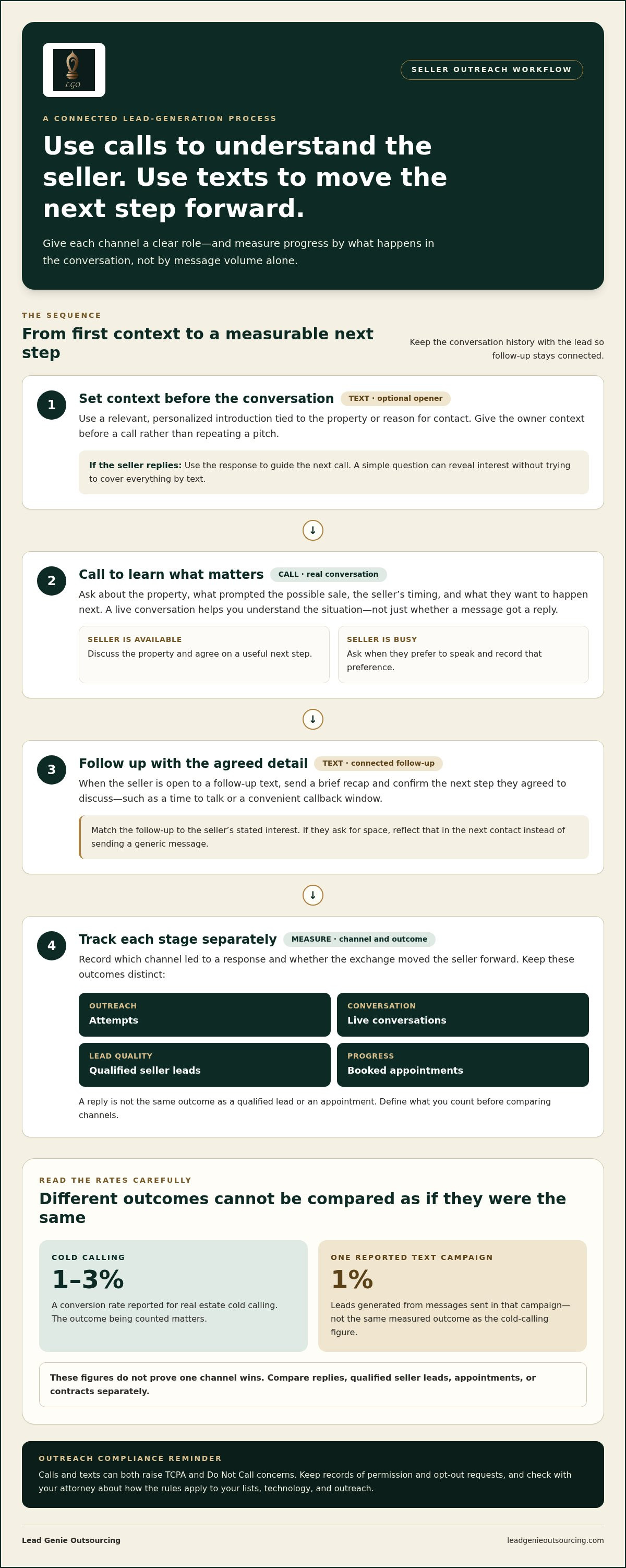
Cold calling typically has a 1-3% conversion rate in real estate, while one reported text campaign generated leads from 1% of messages sent. Those figures measure different outcomes, so they don’t prove one channel wins. The useful comparison of text-blasting versus cold-calling conversion rates in real estate depends on what you count: replies, qualified seller leads, appointments, or contracts.
It makes sense to use texts for speed and calls for real conversations. But message volume alone won’t tell you whether a lead is ready to sell. A call’s value depends on what you learn and how you follow up.
This article explains what cold calling can deliver, why texting and calling work differently, and how both can support one lead-generation pipeline. You’ll see what each method does well, where the numbers can mislead, and how to measure progress toward a qualified seller conversation.
Key Takeaways
- Compare replies, qualified seller leads, appointments, and contracts separately. Each stage shows something different about a campaign’s performance.
- Use calls to learn a seller’s situation, then use texts to support timely follow-up and keep the conversation moving.
- Measure cold calling by the quality of seller conversations and the next steps they create, not just the number of dials.
- Mass outreach can create activity, but message volume alone doesn’t show whether prospects are reachable or ready to sell.
- Track results by channel and lead stage so you can see where your real estate pipeline gains traction.
Surveyed effectiveness of phone sales
A Sales Insights Lab survey found that 41.2% of respondents called the phone their most effective sales tool. That measure reflects respondents’ views, not a real estate appointment or contract conversion rate.
Outreach Touches and Appointment Generation
Outreach touches are the calls or texts used to move a prospect toward a seller conversation. There’s no fixed number of touches that typically produces an appointment. Results depend on whether the prospect responds and agrees to talk.
Keep the stages separate. Count attempts, live conversations, qualified leads, and booked appointments independently. A wholesaler’s reported cold-calling results included 1.5 leads per day, but that figure describes leads, not appointments. For the comparison of text blasting versus cold calling conversion rates in real estate, define the outcome before comparing channels. Otherwise, a high reply count can look successful without producing a seller meeting.
Factors Shaping Outreach Conversion Rates
List quality, personalization, timing, and follow-up all affect whether outreach reaches a seller and earns a response. Outdated contact details waste attempts; a direct, relevant opening gives the recipient a reason to engage.
Choose a clear next step, then track what happens. Record whether a call reached the owner, whether the seller discussed the property, and whether follow-up secured an appointment. These measures also make campaigns easier to compare. Don’t judge a broad text blast and a personal call by message volume alone.
Address mobile-phone consent before launching any outreach campaign. Calls and texts can both raise TCPA and Do Not Call concerns; using a different format does not automatically exempt a text. Keep records of permission and opt-out requests, and align campaign practices with applicable requirements. This is not legal advice. Ask your attorney how the rules apply to your lists, technology, and outreach.
Inbound leads call for a different response than cold records. A person who has asked about selling has already started the conversation, so a prompt, useful reply can keep that intent from going stale. Following up within one minute of an inquiry is associated with a 391% improvement in conversion chances. The measure is an association, not a promise for every lead or market.
A value-driven follow-up call within 30 minutes can also help clarify the seller’s needs while the inquiry is still fresh. Ask what prompted the inquiry, what the seller wants to happen next, and whether a call or text is the best way to continue. Log the response and agreed next step. For phone sales, the advantage isn’t simply reaching more people; it’s using each live conversation to learn whether a seller has a reason, timeline, and property worth pursuing.
Benefits of combining cold calls and text messages
Calls and texts can play different roles in the same seller conversation. A call gives you room to ask about the property; a concise message can recap the discussion or confirm a next step. Used together, outreach feels connected rather than like separate campaigns competing for attention.
Start with the channel that fits the lead’s stage. A call can introduce you and explain why you’re reaching out to a cold prospect. If the person engages, ask whether they’re open to a follow-up text. Use it to confirm the agreed next step, such as setting a time to talk or asking for a convenient callback window.
A personalized introductory text can also provide context before a call. Tie it to the property or reason for contact, then use the call to have a real conversation rather than repeat a pitch. If the seller is busy, ask when they’d prefer to speak and record that preference so the next attempt reflects the conversation.
- After a call: Send a brief recap and the next step the seller agreed to discuss.
- Before a call: Use a relevant introduction to explain why you’re reaching out.
- Before prioritizing: Ask whether the owner is still considering a sale, then direct engaged responses to a call.
- Between calls: Share useful information or an offer only when it fits the seller’s stated interest.
This sequence can help you sort responses before spending more time dialing. A seller still considering a sale may be ready for a direct conversation; someone asking for space needs a different follow-up. Keep message history with the lead so another caller can see what was said and avoid starting over.
Texts give sellers a low-friction way to answer a simple question. Asking whether the owner wants to discuss selling can reveal interest without trying to cover the reason, timing, condition, and price in one message. Use the reply to guide the next call. The goal is meaningful engagement, not a higher count of sent messages.
Measure the combined approach by tracking each channel’s role. Note which call led to a reply, which text earned a response, and which exchange produced an appointment. Compare these stages over time, not just across the latest message batch. This shows whether texts support calls or add activity without moving sellers forward.
A clear calling process gives those follow-up texts context; for example, how real estate cold calling works can help investors see where a call fits before and after a seller responds.
Cold calling as a real estate lead-generation tool
Cold calling creates a direct chance to ask property owners about selling, timing, and next steps. A real estate cold-calling conversion rate is typically reported at 1-3%, but that figure can’t be compared directly with a text campaign’s lead rate unless both use the same outcome.
Lead type changes the comparison. A cold call to an owner who hasn’t responded gives the caller a chance to explain the reason for reaching out and hear objections. A text sent to a broad list may produce a reply, but a reply isn’t automatically a qualified seller or appointment. One reported text campaign generated five solid leads from 500 messages, a 1% lead rate. That measures leads per message, not appointments or contracts.
To calculate cost per lead or appointment, divide campaign spending by the number of leads or appointments produced. Costs depend on labor, data, messaging, contact rates, and lead quality. Compare the same stages across channels: a lower cost per reply can still mean a higher cost per qualified appointment if few replies progress.
Cold calling gives investors a way to find out whether an owner has a reason to sell. When an owner mentions a move, property condition, or timing issue, the caller can ask relevant follow-up questions. That helps distinguish leads instead of treating every answer the same. Record the call outcome and next step with the lead.
Contract timing offers another lens, but reported timelines vary by channel and campaign. One wholesaler reported cold-calling leads taking 60-90 days to convert to contracts, compared with 9-45 days for text-generated leads. These are reported experiences, not a controlled comparison. Market, list, seller motivation, and follow-up can all shape the path from first contact to contract.
Use a consistent scorecard for each strategy. Track calls or texts sent, conversations or replies, qualified leads, appointments, and contracts. Then identify where numbers drop sharply. If calls reach owners but few qualify, review the list or opening. If leads qualify but appointments lag, improve follow-up. Focus on progress toward a sale, not activity alone.
- Cold call: Record whether the owner answered and what they said about the property.
- Text outreach: Separate replies from qualified leads and booked appointments.
- Campaign review: Calculate cost at each matching stage, then compare results over the same period.
A useful calling strategy makes the purpose of each attempt clear, then captures the seller’s answer and next step; the real estate cold-calling guide can help investors structure those conversations around seller lead generation.
Autodialers and mass-text tools
Real estate text campaigns should track response, appointment, and closing rates separately. A reported lead rate measures messages that produced leads, not the share of replies that booked appointments or closed contracts.
That distinction matters with mass texting. One reported deliverability range for cold real estate SMS campaigns was 20% to 45% in late 2025. Undelivered messages cannot generate replies, while delivered messages still need to reach the right owner and prompt meaningful engagement. Track delivered messages, replies, qualified leads, appointments, and contracts separately.
A mass-text tool can send messages at scale, but volume isn’t the same as conversion. One reported wholesaler campaign sent 500 texts per day and had a contract by the end of the following week. Treat that as one campaign’s reported result, not a forecast. List source, message relevance, seller motivation, and follow-up all shape what happens after sending.
Autodialers and texting platforms support different workflows. A dialer organizes calling attempts; a text platform manages written outreach. Either way, someone still needs to review responses, update lead records, and stop follow-up when a prospect declines. A seller asking to discuss a property needs a relevant reply, not another generic batch message.
Make the next step clear. If someone responds with interest, route the reply to a person who can ask about the property and decide whether a call makes sense. If the response is unclear, ask one direct follow-up question. If the owner declines, record the outcome and respect the request. This keeps texting connected to a real conversation, not an endless sequence of automated touches.
Technology doesn’t remove compliance duties. A2P 10DLC campaign registration requires businesses to describe their use case. TCPA and Do Not Call requirements can depend on the campaign and how it operates. This isn’t legal advice; ask your attorney to review your texting and dialing practices before launch.
A common mistake is counting a delivered message as a response, or a response as an appointment. Track each outcome separately, then review the path from message to seller conversation and contract. If replies come in but appointments don’t, examine the question and follow-up. If appointments happen but deals stall, review seller motivation, property fit, and who owns the next step.
Use mass-outreach tools to manage activity, not replace judgment. A real person should handle engaged replies and make sure the next contact reflects what the seller said. That lets texting support lead generation without confusing message volume with deal progress.
What are typical conversion rates for real estate text blasting campaigns?
Reported results vary by campaign, and a text reply isn’t the same as an appointment or closed deal. One reported campaign generated 6 leads per day from 337 messages, but that lead count doesn’t show how many leads booked appointments or closed.
That distinction matters when measuring text-blasting conversion rates in real estate. A campaign can generate replies without reaching sellers ready to discuss a property. Track each stage separately: messages sent and delivered, replies, qualified seller leads, appointments, and contracts. Use the same definitions when comparing campaigns or channels.
For example, an owner who replies, “Maybe later,” has responded but hasn’t necessarily become a qualified lead. If the owner shares a reason for selling and agrees to discuss the property, the lead has moved further through the pipeline. A resulting contract is a separate outcome. This prevents a high reply count from hiding weak progress after the first exchange.
The campaign example also shows why context matters. Sending 337 messages and reporting 6 leads gives two useful counts, but not a complete conversion rate. You still need to know the campaign’s delivery count and how it defined a lead before comparing it with another list, market, or message. Don’t assume one campaign’s result will carry over to a different audience.
Review each message alongside its follow-up. A direct question can make it easier for an interested owner to respond, and a timely, relevant follow-up can turn that response into a conversation. But a generic message, outdated contact details, or an unclear next step can leave replies stalled. Check the lead record and message history before contacting the seller again.
- Response rate: Compare replies with messages delivered, not just messages queued.
- Lead rate: Define what qualifies as a seller lead before counting results.
- Appointment rate: Track booked seller conversations separately from replies.
- Closing rate: Follow contracts through to the final outcome.
Compare campaigns using the same definitions and time window. If one report counts every reply as a lead while another counts only sellers with a clear reason to sell, the rates aren’t comparable. A shared scorecard shows the difference and helps pinpoint whether the list, message relevance, or follow-up needs attention.
For investors, a focused call can add seller context that a text reply alone may not capture; knowing how real estate cold calling works helps show where live conversations fit into lead generation.
Lead Genie Outsourcing: Cold calling for real estate wholesalers
Lead Genie Outsourcing provides cold calling for real estate wholesalers who need steady seller conversations and qualified appointments. Dedicated callers work 40 hours a week, using skip-traced, scrubbed records to reach property owners.
Each lead is qualified around the seller’s reason to sell, timeline, property condition, and asking price, with a call recording for review. The guarantee is 30 qualified seller appointments a month, or dialing continues free until that target is met.
This approach fits investors who want calls handled consistently and need clearer context before deciding which leads deserve follow-up. The LGO CRM is free for 30 days, giving you a place to manage the pipeline.
Book a free 30-minute call with Lead Genie Outsourcing to discuss your seller lead process.
Turn your next campaign into a clear test
Use your understanding of text blasting versus cold calling conversion rates in real estate to shape the next campaign, not declare a permanent winner. Choose one audience, define a qualified seller conversation, and track each pipeline stage. That gives you a practical basis for deciding where your team’s time is best spent.
Keep the test practical. If calls create conversations, examine how those conversations progress. If texts prompt replies, see whether the replies lead to meaningful seller discussions. Adjust one part of the process at a time and compare outcomes using the same measures. Clear tracking turns outreach into a decision you can act on.
When you’re ready to plan your calling approach, book a free 30-minute call with Lead Genie Outsourcing. Take the next step with a focused plan and a better view of your seller pipeline.
Frequently Asked Questions
What are typical conversion rates for cold calling in real estate?
Real estate cold calling is typically reported to convert at 1-3%, but the rate depends on what the campaign counts as a conversion. A qualified lead, booked appointment, and signed contract are different outcomes. Set one definition before tracking results. For example, count an appointment only when a seller agrees to a scheduled conversation, then compare that figure with the number of calls made.
What response, appointment, and closing rates do real estate cold calling campaigns achieve?
Response, appointment, and closing rates measure different things; one campaign-wide conversion figure can’t describe them all. Track calls answered against attempts, appointments booked against conversations, and closed deals against appointments. Review where prospects drop out. If owners answer but rarely schedule, improve the appointment ask. If appointments happen but deals stall, review seller fit and follow-up. Keep each stage’s denominator consistent.
What risks and best practices apply to real estate text blasting and cold calling?
Key risks include contacting people who don’t want outreach, using poor-quality lists, and sending messages without a clear next step. Keep accurate contact and opt-out records, scrub lists, limit messages to relevant follow-up, and stop contacting people who ask you to stop. Before launching calls or texts, ask your attorney how TCPA and Do Not Call requirements apply to your lists, consent records, and tools. This is not legal advice.
What are the average costs per lead and cost per appointment for real estate texting versus cold calling?
There’s no fixed average cost per lead or appointment. Divide campaign spending by the leads or appointments it produces. Costs vary with labor, data, messaging, contact rates, and lead quality.