

The in-house vs outsourced cold calling decision isn’t automatically about cost. Build an in-house team if you can recruit, train, and manage callers and want direct control. Outsource when you need calling capacity without taking on every day-to-day task.
Both approaches involve trade-offs. An in-house caller gives you closer control over scripts, follow-up, and lead handling, but your team must also manage hiring and daily oversight. Outsourcing moves more of that work outside your business, while making clear expectations and regular review essential.
This comparison covers operating costs, pricing models, process requirements, deal size, and management capacity to help you choose a model that fits your operation. Consider what each approach requires, where it fits, and how to weigh the trade-offs before committing. The practical question is whether your team has the capacity to manage in-house calling or needs outside support for execution.
Key Takeaways
- Compare the full cost of an in-house caller, including hiring, training, tools, and management, not just base pay.
- Match the pricing model to what you need to track: calling activity, qualified leads, or appointments.
- Choose in-house when you can manage the process closely; consider outsourcing when your team needs calling capacity without running every task.
- Use deal size, lead follow-up needs, and management time to decide which model fits your operation.
In-House vs Outsourced Cold Calling as a Service: Which One is Better?
Neither model wins on every measure. Connection rates, meeting conversion, call oversight, and record handling all matter. Outsourcing also requires clear controls for data access and brand representation, so establish review rules before sharing seller records.
Connection and Meeting Conversion Rates
Cold-call connection rates and meeting conversion rates measure different steps. U.S. B2B SDR teams have connect rates of 3-10%, and often need 18+ dials to reach one prospect live.
The average B2B cold-call dial-to-meeting success rate was 2.3% in 2025, compared with 4.82% in 2024. Conversion from a live conversation with a relevant prospect to a meeting can exceed 60%. These figures describe B2B calling broadly, not a real estate campaign’s guaranteed outcome.
For useful market intelligence, track dials, live conversations, objections, and meeting outcomes by campaign. In-house teams can adjust scripts directly. With outsourced callers, set a clear reporting process and provide timely feedback.
Compliance and Do Not Call Practices
Do Not Call list handling is an operational control, not a substitute for legal review. Document how you screen records, apply suppression requests, and keep campaign lists current. Assign someone to manage updates and record when each campaign list was reviewed.
Outsourcing adds a handoff: the investor and calling team need clear instructions for record access, list changes, and call outcomes. Before dialing, have your attorney review the TCPA and Do Not Call practices for your operation. A vendor’s process is not legal advice for your business.
Visibility, Call Quality, and Brand Consistency
In-house calling allows direct coaching and day-to-day script changes. Outsourced calling can still be transparent when you receive call outcomes, recordings, and regular reviews. Set a scorecard first: the opening, the seller’s reason for considering a sale, questions answered, and the next step.
The U.S. Government Publishing Office notes that telemarketers may falsely claim an association with a business’s regular supplier or copier manufacturer, creating reputational risk. Give callers approved ways to identify your business, and review recordings for accurate, consistent representation.
Market intelligence is useful only when outcomes are logged consistently. Tag each call with a clear result, such as no answer, not interested, follow-up requested, or appointment set. Compare tags across campaigns to spot weak list segments, recurring objections, and script gaps. Use those findings to coach an employee or guide an outsourced team.
| Option | Connection and conversion | Compliance workflow | Visibility and brand control |
|---|---|---|---|
| In-house | Direct script changes | Managed internally | Immediate coaching and review |
| Outsourced | Depends on campaign reporting | Requires clear handoffs | Set recording and review rules |
Choose in-house for direct daily control. Outsource when you can define the controls, reporting, and review schedule.
Hiring, training, telephony, and infrastructure costs
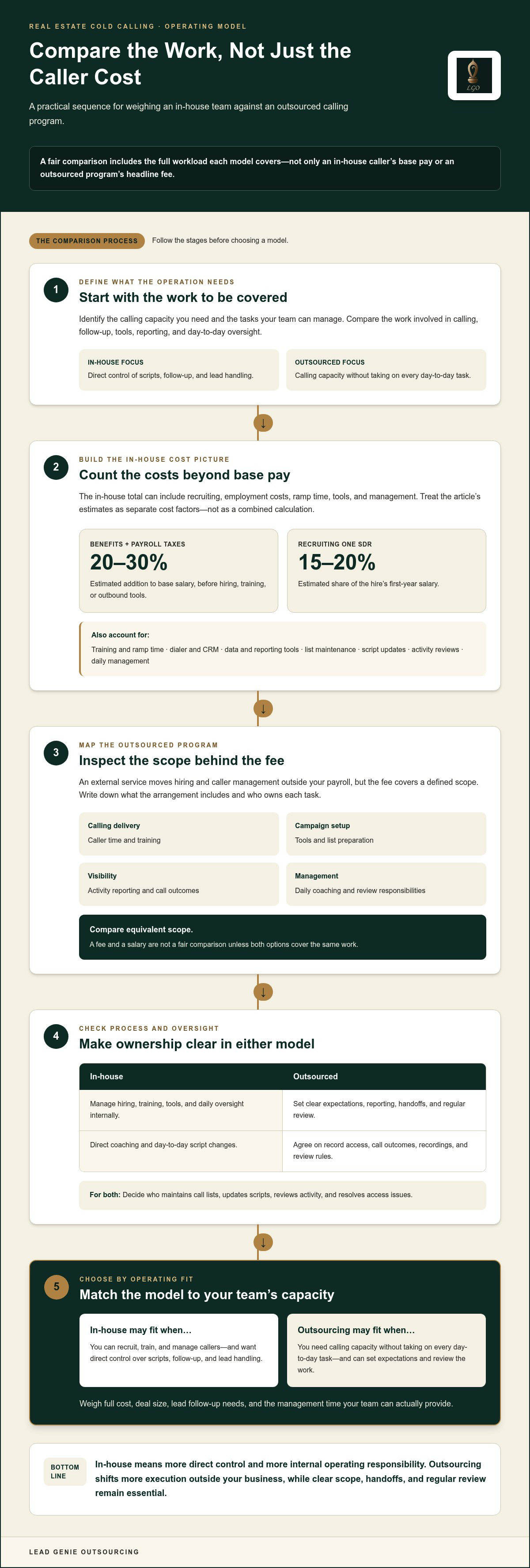
Compare the full cost of employing callers with the scope of an external program. Base salary is only one expense: hiring, ramp time, tools, and management also affect the in-house total.
In-House Salaries and Employment Costs
Benefits and payroll taxes add an estimated 20% to 30% of base salary, before hiring, training, or outbound tools enter the budget.
Recruiting one SDR is estimated to cost 15% to 20% of the hire’s first-year salary. Those expenses land before a new caller reaches steady output, so include recruiting and onboarding in the first-year plan, not just the ongoing payroll forecast.
Fully Loaded SDR Costs
That broader cost is more useful for comparison than base pay alone, though actual expenses depend on how your team is set up.
Ramp time can add another cost. While a new hire learns the script, records, and follow-up process, you’re paying for the role before it reaches consistent productivity.
Outsourcing Costs Versus SDR Compensation
An external service moves hiring and caller management outside your payroll, but its fee covers a defined scope, not just one employee’s salary. Compare what each arrangement includes: caller time, training, tools, list preparation, reporting, and responsibility for daily coaching.
For an in-house role, budget for recruiting, payroll costs, and management time. For outsourcing, assess the agreed deliverables and how activity is reported. A low headline fee cannot be compared fairly with a salary unless both options cover the same work.
Telephony and Infrastructure Costs
List the dialer, CRM, data, and reporting tools your workflow needs, then count each cost once.
In-house infrastructure needs an owner, too. Decide who maintains call lists, updates scripts, reviews activity, and resolves access issues. An outsourced program may bundle parts of that setup, but you still need a clear handoff for records, call outcomes, and follow-up.
Build a side-by-side budget covering first-year hiring, employment costs, tools, management, and the external program’s scope. Then compare the costs with the workload your team can actually manage, not just the caller’s base salary.
Outsourcing pricing models and cost comparison
Choose a provider whose billing model fits the result you need. Review the contract, define a qualified prospect, and compare what each fee covers before assessing lead generation costs.
Retainer pricing
A retainer pays for an agreed calling program over a set billing period. It can suit investors who want dedicated cold callers and consistent campaign activity. Check whether the scope includes caller time, list work, training, reporting, and follow-up. Compare those deliverables with the management and infrastructure costs of doing the same work in-house.
Per-lead pricing
With per-lead pricing, payment is tied to leads that meet an agreed definition. Be precise: specify what qualifies a seller lead, how duplicates are handled, and what happens when contact details are unusable. A record without a seller conversation, for example, may not meet the same standard as a lead with a clear reason to sell and a defined next step.
Pay-per-meeting pricing
Pay-per-meeting pricing ties payment to booked meetings rather than dialing volume. Before signing, define a qualified meeting: who must attend, what seller information must be captured, and how cancellations or rescheduling count. This model focuses on meetings, but you still need to assess whether appointments fit your buying criteria and follow-up process.
Contract terms and provider review
Evaluate providers by reviewing a sample call, a sample report, and the written campaign scope. Ask how callers handle objections, record outcomes, and pass seller details to your team. Compare the promised work with the contract, including billing triggers, list ownership, reporting frequency, and cancellation terms.
Use a simple comparison sheet. Record the fee structure, included work, definition of a qualified lead or meeting, and any setup or change charges. Apply the same assumptions to each option. A retainer cannot be compared fairly with a per-meeting offer if only one includes list preparation.
Finally, compare the cost per useful outcome, not just the invoice. A meeting without seller motivation or a workable timeline may take follow-up time without advancing a deal. Set your qualification rules first, then choose the model that holds the provider accountable for the work your team values.
Building an effective calling process
Cold calling works best when every call has a purpose, a recorded outcome, and a next step. Define the workflow before assigning calls to an in-house team or an external partner.
Start with the seller profile. Define the records to call, the reason a seller might consider a sale, and what makes a conversation worth pursuing. Irrelevant outreach can damage a campaign: 73% of B2B buyers actively avoid suppliers that send irrelevant outreach. For real estate investors, a useful call should uncover seller context, not just confirm a phone number.
Next, write a short call guide using this real estate cold calling guide to shape the opening, prompts, and outcome rules. Give callers a few clear questions and rules for recording results. For example, they can note whether the owner is open to selling, what condition concerns they mention, and whether they want follow-up. Leave room for natural conversation. A rigid script can make it harder to hear what the seller actually says.
Set a workable dialing target. A Sales Development Representative averages about 45 daily dials, according to The Bridge Group. Fifty dials per day has been a standard expectation for effective cold outreach, while calling 100 or more people in one day can be demanding and frustrating. Treat these figures as planning references, not quotas detached from list quality, call length, and follow-up work.
Log every outcome in one shared system. Use consistent tags such as no answer, follow-up requested, not interested, and appointment set. Add a brief note about the seller’s response so your team can see which records need another touch and which should stop receiving routine outreach.
- Before launch: assign record ownership, approve the call guide, and set outcome tags.
- During outreach: review a sample of calls and correct unclear wording quickly.
- After each campaign: compare connection, seller interest, follow-up, and appointment outcomes.
Review productivity by stage, not by dials alone. If callers reach owners but rarely uncover a reason to sell, adjust the list or questions. If sellers request follow-up but no one acts, fix the handoff. Linking every call to an owner and next action helps protect revenue.
Use the same process for in-house and outsourced campaigns. An in-house caller needs coaching and feedback; an external caller needs the approved script, consistent outcome definitions, and a reliable way to return seller details. Review the figures and call notes together, then change one part of the process at a time. This helps show whether a change improved conversations or merely increased activity.
Choosing a model based on deal size and management capacity
Deal size sets the value of a seller conversation; management capacity sets who can run the calls. Consider outsourcing for average deal sizes of $10,000 to $100,000, then weigh lead follow-up, pipeline ownership, and the time your sales team can give callers.
Let deal size shape the decision
For a deal in the $10,000 to $100,000 range, compare the cost of calling with the value of a qualified opportunity. A smaller potential deal leaves less room for a slow handoff or weak follow-up. Larger opportunities may justify more internal control, especially when the investor needs detailed seller context before deciding whether to pursue a property.
Deal size alone does not determine the right model. Consider your acquisition criteria, the number of viable prospects in your target market, and how quickly your team can act after an appointment. If nobody reviews a caller’s notes promptly, for example, more dialing will not solve the bottleneck.
Count the management work
An in-house caller needs more than a phone and scripts. Someone must coach calls, review outcomes, manage records, and keep follow-up moving. If you can consistently assign one person to those tasks, in-house calling gives you direct control. But if that person already handles offers, closings, and seller follow-up, the added responsibility may be hard to sustain.
Outsourcing moves daily calling work outside your team, but your role in the pipeline remains. You still need someone to direct the campaign, review leads, and assign next steps. Ask who will review each appointment and decide what happens next. If nobody owns that handoff, fix the process before increasing call volume.
Use scale and control as tie-breakers
In-house cold calling can become more cost-efficient at 15 or more full-time callers. That scale also requires enough management capacity to hire, coach, and keep the team aligned. Below that level, compare the cost of internal oversight with the value of controlling scripts and call handling directly.
Choose in-house if your team can manage callers and wants to adjust scripts quickly. Choose outsourcing if your team can handle appointments but lacks capacity for daily calling management. A hybrid approach can also work: keep seller qualification and acquisition decisions internal while assigning outbound calls externally.
Use this decision guide before committing:
- Pick the deal-size range and seller criteria your campaign targets.
- Name who owns scripts, caller coaching, and appointment follow-up.
- Check whether your internal team can act on every qualified conversation.
- Compare the options against expected workload, not just call volume.
The right model keeps the pipeline moving from the first call to a clear next step. Define the calling process and handoff so everyone understands their role before outreach begins.
Lead Genie Outsourcing: Cold calling for real estate wholesalers
Lead Genie Outsourcing provides cold calling for real estate wholesalers and investors who need dedicated calling without building an internal team. Callers work 40 hours a week, and each caller receives 10,000 skip-traced, scrubbed records.
Seller leads are qualified on four pillars: reason to sell, timeline, condition, and asking price. Call recordings let you review how each appointment was qualified. The service guarantees 30 qualified seller appointments a month, or dialing continues free until that target is reached.
This model fits investors who can handle seller follow-up but want calling execution handled externally. If you’re weighing that trade-off for your pipeline, book a free 30-minute call.
Set the next move for your calling operation
The in-house versus outsourced cold calling decision comes down to who can own the work after the first dial. Before committing, assign responsibility for seller follow-up, decide how calls will be reviewed, and define how you’ll know the model is working. A clear owner keeps appointments moving and helps your team adjust when a campaign needs a change.
Lead Genie Outsourcing works with real estate investors and wholesalers through cold calling and the LGO CRM. If you want to talk through how that setup could fit your operation, book a free 30-minute call.
Choose the model that protects your time and keeps seller conversations moving. Define the process first, then build from there.
Frequently Asked Questions
Decision Framework: Which Model Is Better for You?
The better model is the one your team can manage from the first dial through seller follow-up. Start by assigning responsibility for scripts, call reviews, and appointment handling. Then assess whether that person has time to coach callers and act on leads. If your team can manage those tasks and needs direct control, in-house calling may fit. If calling management would pull focus from offers and seller conversations, outsourcing may be a better operational fit.
What Is Cold Calling or Inside Sales?
Cold calling means reaching out to property owners who haven’t asked your business to contact them, with the aim of starting a seller conversation. Inside sales is broader: it can include calls, follow-up, and other sales tasks handled remotely rather than face-to-face. For an investor, a cold call might establish whether an owner is open to selling. The next step is to record the response and assign follow-up.
What Are the Pros and Cons of In-House Versus Outsourced Cold Calling?
In-house calling gives you direct control over scripts, coaching, and how callers represent your business. It also makes your team responsible for recruitment, training, daily oversight, and coverage when a caller leaves. Outsourcing can move much of the calling work outside your operation, but you still need clear expectations and regular outcome reviews. Either way, assign someone to approve script changes and route seller replies.
How Much Does It Cost to Hire and Manage an In-House Cold-Calling Team in the US?
The total cost includes more than a caller’s paycheck. Budget for recruiting, payroll expenses, training time, dialing and CRM tools, and the manager’s share of time. Separate startup from recurring costs to see what the first year requires. Track useful outcomes, such as qualified seller conversations, too: payroll alone does not show the cost of a viable opportunity.
What Are Typical Costs and Pricing Models for Outsourced Cold-Calling Services?
Cold-calling providers may charge a retainer, a fee per qualified lead, or a fee per meeting. Each model ties payment to a different unit of work, so compare the scope and billing trigger rather than treating the options as interchangeable. Define a qualified lead or meeting, how duplicates are handled, and what reporting you receive. For a real estate campaign, clarify how seller information reaches your team.
How Do In-House and Outsourced Cold-Calling Teams Compare on Conversion Rates and ROI?
ROI comparisons are useful only when both teams use the same definitions. Track dials, live conversations, qualified seller leads, appointments, and deals separately. Compare each model’s cost with the outcomes your acquisition process can use. A high appointment count may not mean much if sellers do not meet your criteria. Review call notes and disposition outcomes alongside the figures before changing scripts or shifting the budget.
How Long Does It Take to Recruit, Train, and Launch an In-House Cold-Calling Team?
Recruiting and ramping an in-house caller takes time. The schedule depends on hiring, training, and how ready your campaign materials are. Before recruiting, prepare the target seller profile, approved script, record-handling process, and lead handoff. A new caller can then practice handling objections and learn how your team records outcomes. Without that preparation, the launch may stall even after the role is filled.
When Should a Company Choose In-House Cold Calling Versus Outsourcing?
Choose in-house when direct script control and daily coaching matter and someone is available to manage callers. Consider outsourcing when your team can handle seller conversations but lacks capacity to run the calling operation. Also weigh the value of a potential deal against the work needed to reach and qualify owners. Whichever model you choose, assign responsibility for each appointment before calls begin so interested sellers do not get lost between teams.