

Fast follow-up matters, but persistence without a plan turns into noise. Knowing how to follow up with seller leads means responding while interest is fresh, tailoring each conversation to the seller’s reason, timeline, property condition, and asking price, then recording what happens next. For example, you could make the first contact within an hour after a seller shows interest, and keep the next steps clear.
A seller may not be ready to move forward after one conversation. The challenge is staying useful without repeating the same pitch or losing track of who needs a call. A consistent process gives every lead a clear next step and makes each follow-up relevant.
This guide lays out a practical follow-up rhythm, ways to personalize calls and messages, and simple CRM habits that keep leads from slipping through the cracks. You’ll also see how to stay confident, handle unanswered outreach, and know when to pause rather than push.
Key Takeaways
- Use a CRM to capture each seller’s details, conversation history, status, and next follow-up step.
- Shape your next message around the seller’s response: clarify uncertainty, respect a clear no, and give an interested seller a specific next step.
- Build confidence with a prepared opening, careful listening, and a clear reason for each outreach attempt.
- Personalize follow-up with details from the conversation, not a repeated generic pitch.
- Set a steady outreach rhythm, track each touch, and pause when the seller asks for space.
1. CRM automation and lead management
A customer relationship management (CRM) system gives every seller lead a clear record. Use it to store contact details, set a status, and timestamp each interaction. After a call, for example, log the date, channel, outcome, and agreed next step. This gives everyone handling the lead a shared view of the conversation, rather than relying on memory or scattered notes.
Build the prospect’s history from the first interaction. Record how the lead entered your pipeline, when you first followed up, and how the seller responded. Note the reason for selling, timeline, property condition, and asking price when the seller shares them. Keep the record current as the lead’s status changes. A timeline shows what happened, not just where things stand now.
Set clear triggers for automation. When a new lead enters the CRM, create a task for personal outreach and assign an owner. After a call, record an outcome such as “interested,” “not ready,” or “no response.” Use that outcome to set an appropriate next task. If a seller asks you to call later, schedule a dated reminder instead of sending the same message to every lead.
Use automation to support judgment, not replace it. A workflow can remind you to follow up, but review the conversation before sending a message. Pause automated outreach when a seller replies, asks for time, or says they aren’t interested. If a seller names a month to reconnect, update the record and schedule the next task accordingly. A generic sequence shouldn’t override what the seller said.
Keep CRM fields consistent and useful. Choose a small set of statuses and define each one. “Contacted” should mean an outreach attempt was made, not that the seller replied. Add a brief note using the seller’s own words when the reason or timing needs context. Clear labels make records easier to sort and help prevent an unanswered call from being mistaken for a completed conversation.
Review the task list at the start of each workday. Handle overdue follow-ups, check replies, and make sure every active lead has a next step. If a task has no owner or due date, assign both. This routine turns the CRM into a working queue rather than a storage drawer. It also makes how to follow up with seller leads easier to repeat without relying on memory.
Review records, not just message counts, to see whether your process is working. Look for missing outcomes, outdated statuses, and leads without a scheduled action. If the same issue appears across several records, adjust the workflow or coach callers on what to capture. A complete history helps you make the next contact relevant and keeps automation grounded in real conversations.
2. Lead Follow-Up Process: How to Follow Up on Leads?
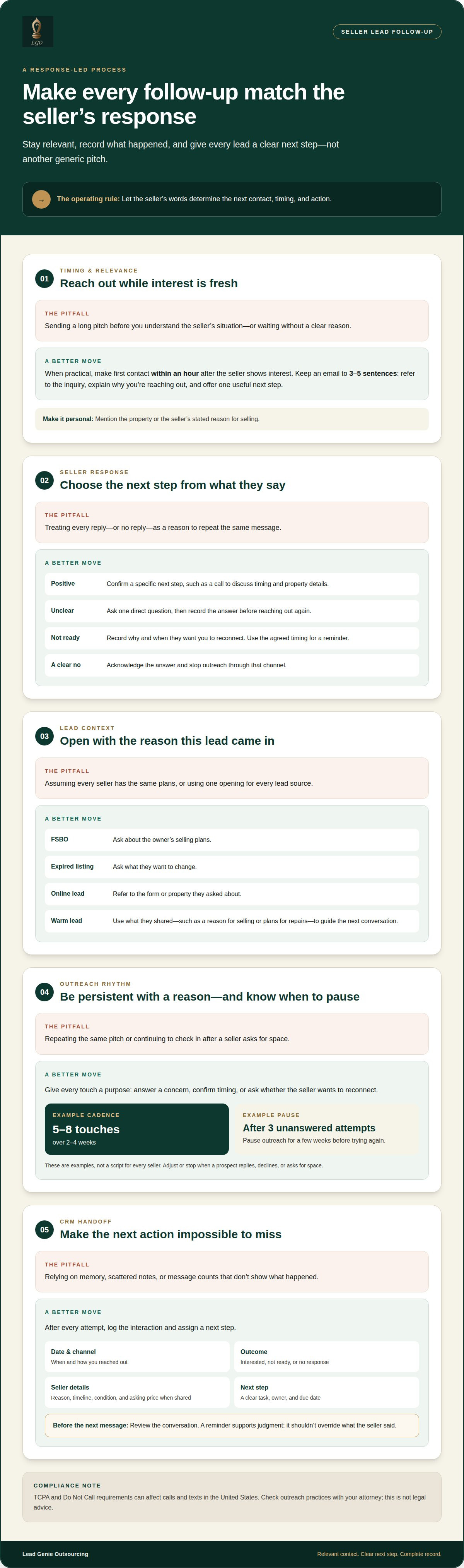
Match each follow-up to the seller’s response. If they reply positively, confirm the next step, such as a call to discuss timing and property details. If they say no, acknowledge their answer and stop outreach through that channel. If their response is unclear, ask one direct question and record the answer before contacting them again.
As an example, when practical, contact a new lead within an hour of the seller showing interest. An email of three to five sentences can refer to the seller’s inquiry, explain why you’re reaching out, and offer one useful next step. Mentioning the property or the stated reason for selling makes the message relevant. Avoid a long pitch before you understand the seller’s situation.
Warm leads have shown interest or shared a reason for selling. Use that information to guide the next conversation. If someone says they may sell after making repairs, ask whether they’d like you to reconnect once they have a clearer timeline. Cold prospects need a simple introduction and a low-pressure question. Don’t use a cold call as a reason to repeat the same pitch in every later contact.
FSBO, expired, and online seller leads call for different openings. With a FSBO, ask about the owner’s selling plans. With an expired listing, ask what they want to change. With an online lead, refer to the form or property they asked about. Focus on the seller’s stated reason and invite a conversation instead of assuming they’re ready to sell.
If a seller isn’t ready, record why and when they want you to reconnect. If they say they need several weeks, set a reminder for the agreed period instead of sending repeated check-ins. If they don’t give a timeframe, ask whether they’d prefer a later follow-up or no further contact. Let their answer determine the next step.
TCPA and Do Not Call requirements can affect calls and texts in the United States. Review TCPA and Do Not Call compliance guidance with your attorney before setting outreach practices; this is not legal advice.
Record an outcome for every follow-up attempt, even when nobody answers. As an example, a suggested sequence might use five to eight touchpoints over two to four weeks, followed by a pause or a later reminder. Treat that cadence as a starting point, not a script for every seller. Stop or adjust outreach when a prospect replies, declines, or asks for space.
As an example, after three unanswered attempts, you could pause outreach for a few weeks before trying again. Make each attempt purposeful by adding context, such as a question about timing or a brief reference to the original inquiry. Record what happened, what the seller said, and what action comes next.
3. Persistence and confidence in the sales process
Persistence means making the next contact useful, not repeating the same pitch. For example, a follow-up plan might include 7–10 touches, but the right number depends on the seller’s response and timing. One unanswered call shouldn’t automatically end the conversation. Each touch needs a purpose: answer a concern, confirm timing, or ask whether the seller wants to reconnect. If a prospect declines, respect the answer and stop outreach.
Confidence comes from preparation and practice. Train callers to open clearly, listen without rushing, and respond to seller questions. Use call examples in coaching. For instance, review a conversation where a seller says, “I need to talk with my family.” Practice acknowledging that concern and asking when a later conversation might be useful.
A script gives callers a steady starting point, not a rigid speech. Write an opening that identifies the reason for the call, then use prompts to uncover the seller’s reason, timeline, property condition, and asking price. Include likely questions about the process and concise, accurate answers. Use role-play prompts from a real estate cold-calling guide to rehearse lines aloud, then adjust anything that sounds unnatural or fails to invite a response.
Templates can make routine messages clearer while leaving room for personal details. A follow-up email template might include a greeting, a reference to the last conversation, one relevant detail, and a simple next step. Before sending, replace generic wording with something the seller actually shared. A template should save drafting time, not make every message sound identical.
Prioritize leads by readiness and the action they need next. A seller who asked for a call today takes priority over someone who requested a later check-in. A clear no should not remain in the active queue. Sort leads by status, response, and timing, then assign an owner to each active follow-up. This keeps the team focused without treating every record as equally urgent.
Use CRM records to review performance. Look at contact attempts, replies, scheduled conversations, and lead outcomes alongside the campaign that brought each prospect in. If a campaign produces replies but few meaningful conversations, review the opening and qualification notes. If follow-ups are missing, check task ownership and call reviews. These checks can show where coaching or process changes may help.
Persistence becomes pressure when callers ignore seller feedback. Train the team to recognize requests for space and record them clearly. During call reviews, check whether the caller listened, addressed the stated concern, and agreed on a next step. Consistent use of a clear process builds confidence.
4. Personalizing follow-up messages
A personal message shows you listened. Use one detail from the seller’s last conversation and connect it to the reason for reaching out. If the owner mentioned inherited repairs, ask whether they’ve had a chance to assess the work. If they’re weighing a move, refer to the timing they shared. A relevant detail builds a stronger connection than using the seller’s first name alone.
The lead source can shape your opening. For a FSBO, refer to the owner’s selling plans. For an expired listing, ask what they’d change next. For an online inquiry, mention the property or question submitted. The source provides context, but the seller’s own words should guide your message.
Personalize the conversation around the seller’s needs, not your preferred deal structure. If the seller wants speed, ask what timing they have in mind. If repairs are the concern, ask which condition issues matter most. If price is the sticking point, clarify how they arrived at their asking price. One focused question helps both sides decide whether another conversation makes sense.
Keep email brief and specific. As an example, a useful follow-up could fit in three to five sentences: mention the last conversation, reflect one stated need, offer a relevant next step, and make it easy to reply. For example: “You mentioned needing time to clear the property. Would it help to reconnect after that’s done?” Avoid a generic pitch that ignores the seller’s concern.
Before a call, prepare a personal prompt rather than a full speech. Note the seller’s last stated reason and one question that can move the conversation forward. If they said a tenant makes access difficult, ask what arrangement would work. If they raised a family decision, ask whether they’ve had time to discuss their options. Then listen instead of pushing through a script.
A short video can add a human touch when it answers a clear question. As an example, keep it to 60 seconds, address the seller by name, and explain one relevant point. For example, clarify what information you’d need to discuss a property’s condition. Skip the video if it adds no value or the seller prefers a different channel.
Before sending a message, compare it with the last exchange. Does it reflect what the seller said? Does it offer a useful next step? If the seller asked for no further contact, don’t follow up again. Personalization means respecting that direction, not looking for a way around it.
5. Scheduling a consistent follow-up rhythm
The best cadence is one you can maintain and adjust to the seller’s response. Use a planned schedule as a baseline, then change the next contact if the seller names a time or asks for space.
Set the first touch according to how the lead came in. When a seller has just shown interest, make contact promptly when practical. If they don’t respond, schedule another attempt instead of leaving the lead in an unsorted queue. If they name a preferred time, follow up then rather than continuing through the default sequence.
Give each channel a clear purpose in your follow-up calendar. A sample rhythm might include weekly emails, monthly phone calls, and quarterly in-person interactions. Treat this as a starting point, not a rule for every seller. Use their response, stated timeline, and preferred contact method to decide whether each touch still makes sense.
Set follow-up tasks while the conversation is fresh. After each call or email, record the outcome, next action, and due date. If a seller asks you to call after they’ve discussed the property with family, create a reminder for the time they named. If they don’t give a date, ask when a check-in would be useful. A specific task helps keep the lead from slipping through the cracks.
Group the day’s work by action, not just by lead source. Start with replies that need an answer, then handle scheduled callbacks, followed by unanswered leads with a task due. This order protects time for sellers who are actively engaged. Keep a separate pause status for sellers who asked for later contact, so they don’t appear alongside leads ready for a conversation.
Use the calendar and CRM together. The CRM should show a lead’s history and status; the calendar should make upcoming calls and emails visible. At the start of each workday, review due tasks. At the end, close completed tasks and set a new due date when another contact makes sense. A structured calling workflow can keep these steps tied to a consistent process.
Review your follow-up rhythm regularly. If sellers respond to a particular type of contact, note the pattern and adjust future outreach. If a scheduled touch gets no response, make the next message useful rather than sending an identical follow-up. Track the contact date, channel, response, and agreed next step. Those details support consistent outreach without treating every lead the same.
Lead Genie Outsourcing
Lead Genie Outsourcing supports real estate investors and wholesalers with cold calling and tools for managing seller leads. Dedicated callers work 40 hours a week. Each seller lead is qualified around reason for selling, timeline, property condition, and asking price, with a call recording for review. The LGO CRM is free for 30 days, giving you a place to manage lead details and follow-up.
Turn to this support when consistent outreach and lead tracking are taking time away from running your business. Lead Genie Outsourcing guarantees 30 qualified seller appointments a month, or keeps dialing free until it reaches 30.
Book a free 30-minute call to discuss your seller lead follow-up needs.
Put the next seller conversation on the calendar
A clear process for how to follow up with seller leads gives every conversation a useful next step. Make that process part of your daily operations: review open leads, prepare for scheduled calls, and record what each seller wants next. Use those notes to keep outreach relevant as circumstances change.
Start with one practical improvement: choose a consistent time to review your follow-up queue. Clear overdue tasks, assign an owner to active leads, and pause outreach when a seller asks for space. Small, repeatable actions keep your process grounded in what sellers actually say.
If you want support with seller outreach and lead management, book a free 30-minute call with Lead Genie Outsourcing. Build a process you can run with confidence, one seller conversation at a time.
Frequently Asked Questions
What's the Best Way To Follow Up With a Sales Lead?
Make each contact relevant to the seller’s last response and end with one clear next step. If they ask about timing, address that before suggesting another conversation. If they need to discuss the decision with someone else, ask when it would be useful to reconnect. Record the outcome so the next person who contacts them doesn’t restart the conversation.
How many times should you follow up with a lead before giving up?
There isn’t one fixed cutoff for every seller. A lead sequence may include five to eight touchpoints across two to four weeks, while conversions typically require 7–10 touches. If a seller declines or asks you to stop, respect that direction. After three unanswered attempts, you can pause outreach, let the lead rest for a few weeks, and reassess whether another useful contact makes sense.
How soon should I follow up with a lead?
When practical, contact a seller within an hour of their showing interest. A quick response lets you address the question that prompted their inquiry while it’s still fresh. If you can’t reach them, record the attempt and set a follow-up task. For a lead received outside your calling hours, respond at the next suitable opportunity and refer to the specific property or request.
Lead Follow-Up Process: How to Follow Up on Leads?
Start by reviewing the lead’s source and the details the seller shared. Choose the next action based on their response: answer a question, clarify a point, schedule a conversation, or pause contact. After each interaction, record the outcome and next step. If a seller asks about your process, for example, share only the details relevant to that request, then give them room to respond.
Lead follow-up sequences: How many touchpoints do you actually need?
A practical starting sequence might use five to eight touchpoints over two to four weeks. For example, send personalized outreach on day one, a useful resource on day three, a check-in on day seven, and a pause-or-reconnect message on day fourteen. Adjust the sequence when the seller replies, requests another time, or declines. The goal is purposeful contact, not reaching a touch count at any cost.
What should a lead follow-up email include?
Keep the email to three to five sentences. Refer to the seller’s inquiry, address one specific need, and offer a clear next step, such as answering a question or arranging a call. You might mention the property they asked about and ask whether they still want to discuss it. Avoid a long pitch, several unrelated questions, or claims the seller hasn’t asked you to explain.
What’s the difference between lead nurturing and lead follow-up?
Follow-up responds to a specific interaction, such as a seller’s inquiry, call, or question. Lead nurturing maintains a relationship over time when the seller isn’t ready to act. For example, follow-up might answer a question about next steps; nurturing might share a relevant update later if the seller welcomes continued contact. Both should reflect the seller’s interests and respect any boundaries they’ve set.
Why Is It Important to Follow Up on a Lead?
Follow-up keeps a seller’s request from getting lost and helps you learn whether their plans have changed. A recorded exchange can capture motivation, timeline, property condition, and asking price. That context helps you decide whether another conversation makes sense. Without a clear record, another caller may miss what the seller already explained or ask a question they’ve answered.