

A clean caller ID does not guarantee your calls will avoid a spam label. How to prevent cold-calling numbers from showing as spam likely starts with three basics: caller authentication, compliant calling practices, and a consistent number reputation. None is a quick fix on its own.
If your number is flagged, it can make seller conversations harder to start. The label may reflect questions about who is calling, how calls are made, or how recipients respond. This guide explains how authentication such as STIR/SHAKEN fits in, which calling habits can protect your reputation, and what to review when a number is marked as spam. You’ll get practical steps for building a consistent calling operation without treating any one tactic as a guarantee.
Key Takeaways
- Caller authentication helps establish who’s calling, but it’s only one part of a number’s reputation.
- Call patterns and recipient responses can affect whether calls are labeled as spam. Learn which signals to review.
- Repeated labels can have more than one cause, so look at caller ID, dialing habits, and how calls are handled.
- Build compliance into your calling process, including the rules for call timing and Do Not Call requirements.
- Use clear, consistent calling practices to support a better caller reputation over time.
1. Caller authentication, caller ID, and reputation
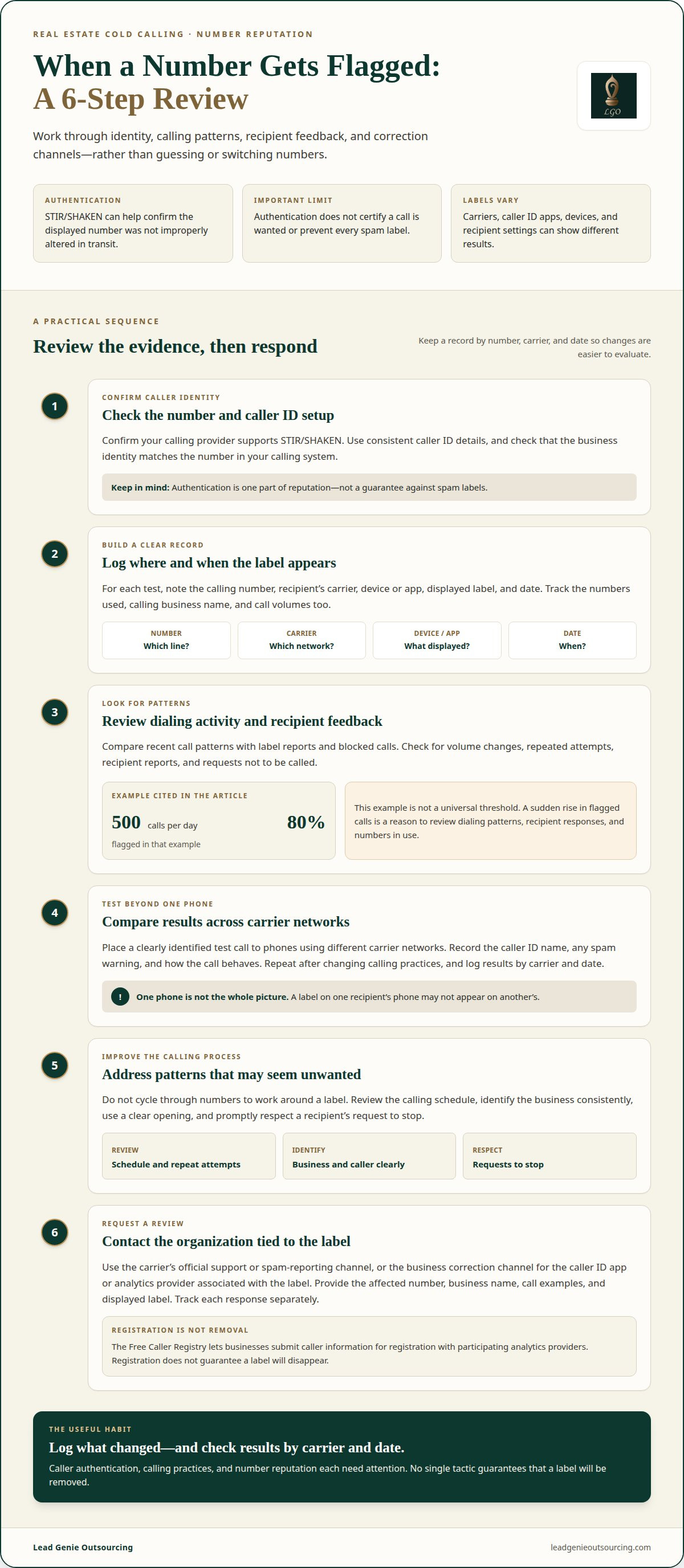
Caller ID has two separate jobs: show a calling number and help recipients judge who is behind it. STIR/SHAKEN, short for Secure Telephone Identity Revisited/Signature-Based Handling of Asserted Information Using toKENs, is a protocol carriers use to authenticate caller ID information. Authentication can help confirm that a call’s displayed number has not been improperly altered in transit. It does not certify that a call is wanted or prevent every spam label.
Build number reviews into your calling workflow. Track the numbers used, the calling business name, call volumes, and dates when labels appear. Then compare results across carriers and devices. A label on one recipient’s phone may not appear on another’s because carriers, caller ID apps, and handset settings can use different signals. For each test, note the number, recipient’s carrier, device or app, and displayed label.
Caller ID reputation services can review reports and help businesses submit number information or request corrections. Costs depend on the provider and the work involved, such as monitoring, number registration, or remediation. Because there is no standard fee, identify what the service includes before paying.
Spam labels can come from wireless carriers, caller ID apps, and analytics providers that supply call data to phone services. Each may have its own business support or number-reporting process. Contact the organization associated with the label through its business support or correction channel, and provide the calling number, business name, and evidence that the number is used legitimately. The Free Caller Registry lets businesses submit caller information for registration with participating analytics providers, but registration does not guarantee a label will disappear.
To test a number across major U.S. carriers, place a clearly identified test call to phones using different carrier networks. Record the caller ID name and any spam warning shown on each device. Repeat the test after changing calling practices, and log results by carrier and date. A single phone will not show how every network displays the same call.
Authentication and reputation need separate attention. Confirm that your calling provider supports STIR/SHAKEN authentication, use consistent caller ID details, and monitor test results. If a number is flagged, review recent call patterns and recipient feedback before requesting a correction. For real estate investors and wholesalers, consistent identification and measured follow-up help sellers recognize and assess calls.
2. Why are my Calls marked as Spam, and How can I avoid it ?
A spam label can reflect call patterns, recipient feedback, or information shared with a carrier. Those signals differ by network, so the same number may display normally on one phone and show “Spam Likely” on another. Do not assume one test call represents every recipient’s experience.
Volume and repeated dialing can draw attention. One example describes a team making 500 calls per day, with 80% flagged. That example isn’t a universal threshold. It shows why a sudden rise in flagged calls should prompt a review of the dialing pattern, recipient responses, and numbers in use.
Recipient reports can also affect how calls are treated. If people repeatedly mark calls as unwanted, that feedback may contribute to a spam label or blocking decision. Track which numbers your team used, when calls went out, and whether recipients asked not to be called. Compare those records with reports of labels or blocked calls.
Carrier tools and phone apps add another layer. Some warn users about suspected spam, silence calls, or block numbers. Settings and labels vary by carrier, device, and app. A recipient may also have enabled call screening, changing what happens before a call reaches them. Test with phones on different networks and note both the label and call behavior.
To dispute a label with AT&T, T-Mobile, or Verizon, contact the carrier through its official customer support or spam-reporting channel. Provide the affected number, business name, call examples, and displayed label, then ask how to submit a review. Track each carrier’s response separately: a correction on one network does not mean other networks changed their treatment.
When a label appears, do not cycle through numbers to work around it. First review the calling schedule, recipient feedback, and how consistently the team identifies itself. Then address patterns that may seem unwanted, such as repeated attempts after a clear request to stop. Track what changed and whether test calls show different results. This creates a useful record instead of guesswork.
For real estate investors and wholesalers, call quality matters alongside volume. A clear opening, relevant conversation, and prompt respect for a recipient’s request can reduce friction in seller outreach. Use a real estate cold calling guide to shape a consistent process, then review call outcomes as part of routine number monitoring.
3. Why Is My Phone Number Showing Up as Spam or Scam Likely?
A number can receive a spam label when its call activity looks unwanted, its identity seems unclear, or recipients report it. For example, a seller who sees repeated calls from a number without a clear business identity may ignore or report them. Labels can also follow a number, so a newly assigned line may carry reputation from its earlier use.
Start by reviewing the number’s history and setup. Confirm the line belongs to your business, identify the business consistently, and check that caller ID information matches the number in your calling system. If you use several lines, assign each a clear purpose and keep its records separate. This makes it easier to trace a label to a specific calling pattern.
Register business numbers with the Free Caller Registry so participating analytics providers can associate a number with your business. Keep the business name and contact details consistent across your phone provider, calling platform, and registration. Treat registration as an identity step, not a promise that every carrier or phone app will remove a label.
Warming up a phone number means introducing calling activity in a measured, consistent way rather than suddenly using it for high-volume outreach. Use the same business identity, make calls relevant to your audience, and review recipient responses as activity grows. Avoid abrupt increases in dialing or repeatedly switching caller ID numbers. A steady pattern gives your team clearer records to review if a label appears.
Replacing a number should be a considered decision, not the first fix. Before retiring a line, review its prior use, recipient feedback, caller ID details, and labeling across test phones. If the number is new to your business, check whether its previous history may affect its reputation. Switching numbers without changing the calling pattern can carry the same problem to the next line.
Prevent scam concerns by making each call easy to identify and understand. State your business name and reason for calling early. Use accurate caller ID details, avoid misleading claims, and respect a recipient’s request to stop contact. For a real estate seller call, explain why you’re reaching out and keep the conversation focused on the property owner’s stated situation.
There is no single timeline for removing a spam label. The carrier or analytics provider must update its classification, and later call activity may affect how the number is treated. Keep dated records of review requests and test results to track whether the label changes across networks.
4. Following telemarketing rules and Do Not Call requirements
Compliance is part of number reputation. For U.S. outbound teams, the Telephone Consumer Protection Act (TCPA) and National Do Not Call Registry requirements may affect calling practices. Calls that don’t respect consumers’ contact preferences can trigger complaints and undermine trust. Ask your attorney how these rules apply to your campaign before dialing.
Calling hours are one issue to discuss with your attorney. Federal Trade Commission guidance refers to restrictions on telemarketing calls to a consumer’s home before 8 a.m. and after 9 p.m. Requirements may depend on the campaign and circumstances, so have your attorney review how timing rules apply, especially if your list spans multiple time zones.
The National Do Not Call Registry and internal suppression lists are also topics to review with your attorney. Ask how Registry listings and requests from people who don’t want further calls should be handled for your campaign. Consumers can register landline and wireless numbers for free by calling 1-888-382-1222 from the number they want registered.
Before a campaign starts, ask your attorney what processes and records may be appropriate for your situation. Topics to discuss can include who owns the list, screening and suppression records, and how opt-out requests are handled. If a seller says, “Don’t call me again,” ask your attorney how that request should be recorded and applied to future outreach.
Call type may also affect the rules that apply. Prerecorded messages, autodialed calls, texts, and live calls placed manually can raise different consent questions. Don’t assume one permission covers every channel or calling method. Ask your attorney to review your campaign’s technology, message type, consent records, and the numbers being contacted before launch.
Ask your attorney to review the procedures and records for each campaign, including any screening, suppression, calling-window, refusal, or consent processes. The rules can depend on the campaign details, and an attorney can advise you on what applies. A clear, attorney-reviewed workflow can help your team address questions about its outreach.
For a real estate campaign, discuss how to identify the business and handle follow-up with your attorney. Don’t assume a seller inquiry permits unrelated follow-up or contact through another channel. Your attorney can assess the rules for your specific campaign, including TCPA and Do Not Call questions. A cold calling compliance guide can also help your team organize its review.
5. Calling practices that support a positive reputation
Call reputation is shaped by the pattern recipients experience, not just the number displayed. A real estate owner who gets repeated calls without a clear reason may view them as unwanted. Build a steady process around relevant lists, clear introductions, and measured follow-up. These habits help recipients recognize the call.
To help prevent cold-calling numbers from showing a Spam Likely label, manage call volume, frequency, and unanswered calls together. Avoid sudden increases in dialing, repeated attempts to the same person, and rapid redials after no answer. Use call records to spot numbers receiving repeated attempts, then adjust the schedule and follow-up plan. There is no single safe volume for every campaign or recipient group.
An unanswered call is not permission to keep calling. Set a clear follow-up rule and log each attempt against the number. If someone answers and asks not to be contacted again, record the request and suppress the number. If a seller asks for a call at a different time, note the requested time and follow the applicable calling rules.
Make the first seconds useful. State the caller’s name and business, then explain why you are contacting the property owner. For example, a caller reaching out about a property should say so plainly instead of using a vague opener. Give the recipient room to respond. A direct introduction reduces confusion and helps distinguish a real conversation from an unexplained interruption.
Use numbers consistently. Assign each number a known calling purpose, keep caller ID details aligned with the business, and avoid swapping numbers to bypass a label. Review call outcomes by number and campaign. If unanswered calls rise or recipients report unwanted contact, pause and inspect the list, timing, script, and follow-up pattern before dialing again.
Call recordings can help managers coach specific behaviors. Review whether callers identify themselves, explain why they are calling, listen to the response, and end the conversation respectfully. Apply the same standards across the team. A brief coaching review can uncover a confusing opener or overly persistent follow-up before it becomes a repeated pattern. These checks make reputation management part of daily operations, not a one-time fix.
For real estate outreach, relevance matters. Keep the conversation focused on the property and the owner’s stated interest. Avoid claims the caller cannot support, and do not treat silence as interest. A structured calling workflow helps teams align records, follow-up, and caller conduct.
Lead Genie Outsourcing
Lead Genie Outsourcing supports real estate investors and wholesalers with cold calling focused on seller conversations. Dedicated callers work from skip-traced, scrubbed records, qualify leads based on reason to sell, timeline, condition, and asking price, and provide call recordings. This gives you visibility into what callers say and how they handle responses, helping you refine outreach and follow-up practices.
The LGO CRM is free for 30 days, giving you a place to manage seller leads and review call activity. This can help keep outreach records organized as you apply the reputation practices in this guide. Explore how the calling process works to see how it fits your operation.
Book a free 30-minute call with Lead Genie Outsourcing to discuss your seller outreach.
Make Caller Reputation Part of the Operating Rhythm
A durable approach to how to prevent cold-calling numbers from showing spam likely is to make reputation an ongoing responsibility. Assign an owner, set a regular review point, and tie decisions to the calls made and responses received. That turns reputation from a one-time cleanup task into a working part of your outreach process.
Use each review to decide what stays the same and what changes next. When a calling pattern shifts, record the change and monitor results across campaigns. Keep that record alongside seller outreach metrics so a number issue is not mistaken for a lead-quality problem. Clear ownership helps your team act on what it learns instead of making untracked changes.
Lead Genie Outsourcing works with real estate investors and wholesalers on cold calling and provides the LGO CRM. If you want to discuss how structured seller outreach could fit your operation, book a free 30-minute call with Lead Genie Outsourcing.
Frequently Asked Questions
Why Is My Phone Number Showing Up as Spam or Scam Likely?
A number may be labeled because recipients report calls, calling activity appears unwanted, or the number’s identity is unclear. A reassigned business line may also have a history unrelated to its current owner. For example, a new team might inherit a number previously used for high-volume calls. Review caller ID details, past use, call records, and recipient feedback before deciding whether to register, correct, or replace the number.
Why are my Calls marked as Spam, and How can I avoid it?
Carriers and phone apps may assess calling activity differently, so one network can flag a call while another displays it normally. User reports and repeated attempts can contribute to the problem. Track outcomes by number and campaign, then review whether recipients answer, report calls, or request no further contact. Avoid rapid retries after unanswered calls, and make each call’s purpose clear as soon as someone answers.
How do I stop my legitimate business calls from showing as Spam Likely?
Use accurate, consistent caller ID details and make calls recipients can identify and understand. Register the business number through the Free Caller Registry, review how it displays on phones using different networks, and follow each carrier’s correction process if a label appears. Record the number, test result, and review request. These steps can help address reputation issues, but no single action controls every carrier or app.
How do I register a business phone number with caller ID reputation databases?
Submit the business number and matching business details through the Free Caller Registry. Use the same business name and contact information shown in your calling setup, and keep a record of the submission. The registry shares information with participating analytics providers. Registration is an identity measure, not a guarantee of a particular caller ID display or removal of an existing spam label.
How do I verify or update business caller ID name and number information with my carrier?
Contact your phone provider or carrier through its business support channel and ask how it handles outbound caller ID names and number records. Have the account owner provide the business name, affected numbers, and examples of what recipients see. Confirm that the calling platform uses the intended outbound number. Test calls afterward, since a carrier update may not change how every device or separate caller ID app displays the call.
What calling practices cause legitimate numbers to be marked Spam Likely?
Sudden increases in calls, repeated attempts to the same person, unclear introductions, and continued contact after a stop request can make outreach feel unwanted. For example, calling a property owner several times after no answer creates a different experience than logging the attempt and following a measured schedule. Tie follow-up to the person’s response, use a consistent business identity, and remove numbers after opt-out requests.
What U.S. telemarketing and robocall rules should businesses follow to avoid spam labeling?
TCPA and National Do Not Call requirements may apply to your campaign. Ask your attorney how they apply to your campaign and dialing method, including whether restrictions on calls before 8 a.m. or after 9 p.m. apply. Requirements can depend on the call type, technology, recipient, and consent.
Which caller ID reputation services label calls as spam, and how do I contact them?
Labels can come from wireless carriers, caller ID apps, and analytics providers that supply call data to phone services. Contact the organization associated with the label through its business support or correction channel, and provide your number, business name, and evidence that the number is used legitimately.