

A deal isn’t done when it goes under contract. Real estate disposition outreach helps put the deal in front of potential buyers as you sell, transfer, or otherwise exit the property. A clear plan keeps the handoff from contract to buyer response on track.
The right buyer, price, and timing all matter. The challenge is aligning them while keeping conversations organized and follow-up moving.
This guide explains what disposition means in real estate investing, when to begin outreach, how to build and contact a buyer list, and where the process can stall. Follow a practical workflow to match a deal with buyers, share the details they need, track responses, and move next steps forward.
Key Takeaways
- Understand disposition as the final phase of an investment, and plan the sale or transfer around your property and portfolio goals.
- Prepare deal details and align approvals before outreach so buyers get clear, consistent information.
- Build a focused buyer list by matching investor types to the property, market, and price point.
- Use calls, texts, and email to share the same core details, then track replies and buyer signals in one place.
- Set a clear follow-up process for engaged buyers and keep each deal’s status visible through the handoff.
Disposition timing and strategy
Local market conditions shape the buyer pool, pricing strategy, and timing of real estate disposition outreach. Review recent sales, competing properties, and buyer activity in the property’s market before setting terms. A buyer profile that fits one area may not fit another.
Misstating a property’s condition, ownership, or assignment terms can waste buyers’ time, erode trust, and disrupt the handoff. Base every claim on current deal information, and correct changed details before contacting buyers again.
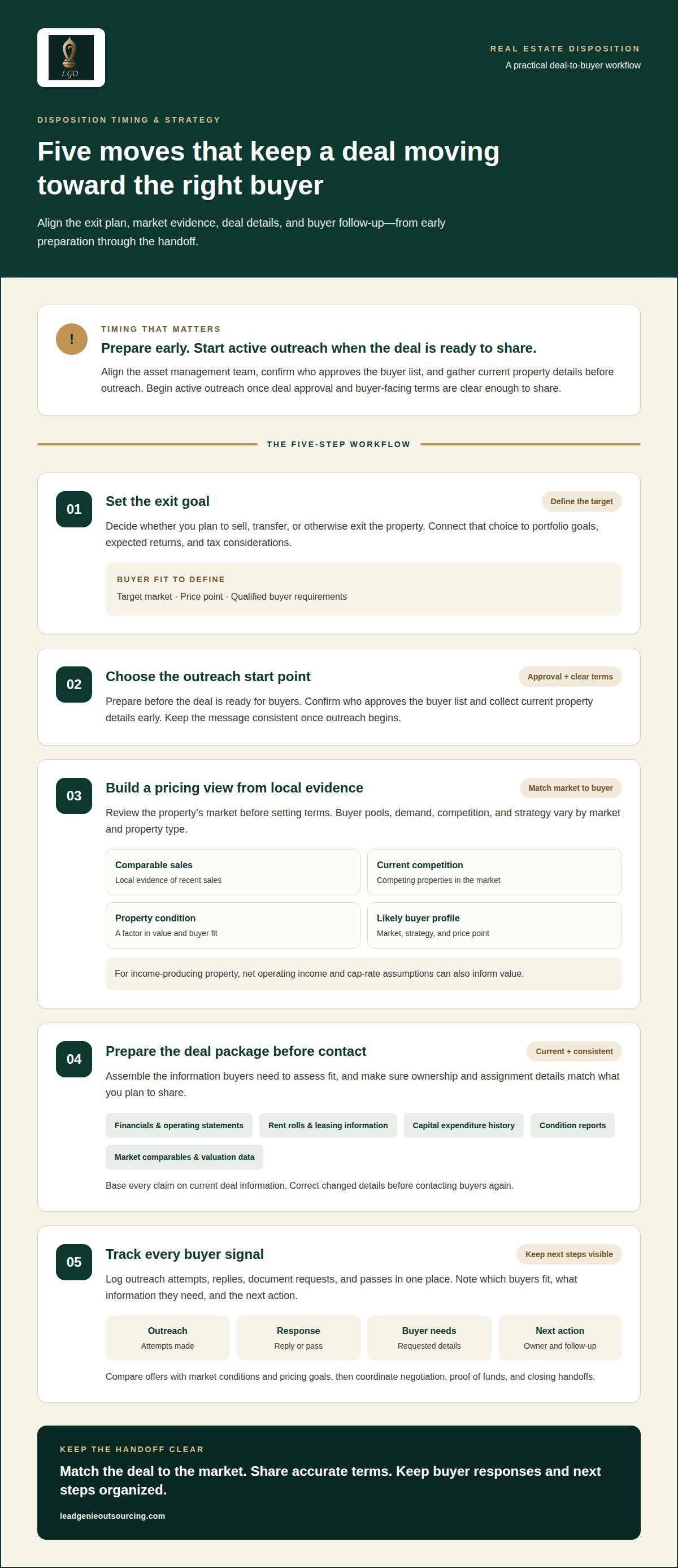
- Set the exit goal. Decide whether you plan to sell, transfer, or otherwise exit the property. Connect that choice to portfolio goals, expected returns, and tax considerations. Then define the qualified buyer’s requirements, including the target market and price point. A clear target helps the team build a focused buyer list and prepare an accurate offer summary.
- Choose the outreach start point. Plan before the deal is ready for buyers. Align the asset management team, confirm who approves the buyer list, and gather current property details early. Begin active outreach once deal approval and buyer-facing terms are clear enough to share. This shortens the gap between approval and a qualified response while keeping the message consistent.
- Build a pricing view from local evidence. Review comparable sales, current competition, property condition, and likely buyer profile. For income-producing property, net operating income and cap-rate assumptions can also inform value. Apply the same pricing logic when matching buyers to the deal. Demand, competition, and buyer strategy vary by market and property type.
- Prepare the deal package before contact. Assemble current financials, operating statements, rent rolls, leasing information, capital expenditure history, condition reports, market comparables, and valuation data. Confirm that ownership and assignment details match what you plan to share. A complete, consistent package helps buyers assess fit and reduces follow-up over missing information.
- Track each buyer signal. Log outreach attempts, replies, document requests, and passes in one place. Note which buyers fit the deal, what information they need, and the next action. Compare offers with market conditions and pricing goals, then coordinate negotiation, proof of funds, and closing handoffs. This makes stalled deals visible while there is still time to respond.
A disposition strategy sets out when and how to sell or transfer a property in light of returns, taxes, and portfolio goals. A disposition manager reviews market trends, property values, and competition to shape pricing and sales strategy. The process should match deals to buyers by market, strategy, and price point, with a system that helps move from contract to a qualified buyer response. Compare offers with market conditions and align asset management early to support sound decisions.
Outreach through calls, texts, and email
- Check the rules before launching. Federal and state laws may apply to real estate marketing calls, texts, and emails. TCPA and do-not-call requirements can affect campaign choices. Consult your attorney about how the rules apply to your outreach, contact records, and messages. Review each channel you plan to use rather than assuming one process covers every campaign.
- Set one approved deal summary. Give each buyer the same core facts: property location, type, condition, price, access details, and contract or assignment terms. Share confirmed information only. If a listing or deal term changes, update the summary before sending another message. Consistency helps buyers assess fit and avoids confusion when a call leads to a text or email.
- Use calls for focused conversations. Open with the property and why you’re contacting that buyer. Ask whether the deal fits their market, strategy, and price range. Record the response clearly, such as interested, needs details, or pass. A call can surface questions that a short message may miss, but provide a written summary when buyers need deal documents.
- Keep texts brief and specific. Identify the deal, explain why it may fit, and ask whether the buyer wants more details. Don’t try to fit the full property package into one message. If the buyer asks for more, send the approved summary through the agreed channel. Track replies and requests so another team member doesn’t repeat the introduction.
- Make email easy to scan. Put the property and key terms near the top, then attach or share the approved deal information. Tie the subject line to the specific opportunity. Distinguish a request for property details from a firm offer or a pass. A consistent record helps the team see which buyers need follow-up.
- Log the outcome after every touch. Record the channel, date, buyer response, information requested, and next step in one place. Use clear statuses, such as replied, requested details, paused, or passed. That record prevents duplicate outreach and shows where the handoff is stuck. For campaign planning, TCPA and DNC compliance guidance can help frame the questions to raise with your attorney.
The TCPA and applicable federal and state do-not-call requirements may regulate real estate marketing calls, texts, and emails.
Real estate disposition definition and investment life cycle
- Place disposition at the end of the investment cycle. Real estate investing moves through acquisition, operation, and disposition. Acquisition means buying an asset; operation means managing it and pursuing the investment plan. Disposition is the final phase: selling, transferring, or otherwise exiting the property. A commercial real estate owner might sell an operating building or transfer ownership. The exit completes one investment cycle and informs the next decision.
- Define the exit before choosing the route. Name the intended outcome: a sale, transfer, or another change in ownership. Connect it to the asset’s performance and the owner’s portfolio goals. For example, an owner may sell a rental property after a long hold when its role in the portfolio changes. That decision is distinct from buying or managing the property. A clear goal gives each later step a purpose.
- Move from strategy to valuation. Start with a plan for timing, pricing, and the likely buyer. Review market conditions, comparable properties, and the asset’s financial performance. For income-producing property, net operating income and cap-rate assumptions can inform valuation. Treat them as inputs, not substitutes for examining the property and its market. The valuation gives the owner a basis for weighing interest and offers.
- Market the opportunity and assess offers. Prepare the information buyers need, then choose a marketing approach suited to the asset. Commercial real estate may attract a different buyer profile than a single rental property. As responses arrive, compare each offer’s price, conditions, and timing with the exit plan. Look beyond the headline figure: inspection or appraisal conditions can affect whether an offer advances.
- Carry the selected deal through closing. As the parties move forward, coordinate due diligence, contract terms, required information, and closing tasks. Track open questions and assign each next step to someone responsible. Buyers may request documents or raise property concerns during due diligence; address them through the transaction process. Closing completes the disposition legally and financially. Review the result against the original investment goal and record insights for future buying decisions.
- Use examples to separate return from exit mechanics. In a hypothetical rental-property example, an asset bought for $200,000 and sold for $400,000 produces a $200,000 profit and a 100% return over a ten-year period. Those figures describe the example’s investment result, not a typical outcome. The disposition itself still requires a planned sale, buyer review, negotiated terms, due diligence, and closing.
How do you build a buyer list for real estate disposition?
- Define the buyer fit for this deal. Start with the property’s location, type, condition, and price point. Add the investment strategy it suits, such as a rental hold or renovation project. A defined profile keeps the list focused: a buyer seeking stabilized rentals may not fit a property that needs major work. Set the criteria before sourcing names so every contact has a clear reason to receive the opportunity.
- Group prospects by buying capacity and strategy. Include cash buyers, investors who own properties free and clear, high-equity owners, and investors with multiple properties. For example, high-equity leads may mean property owners with 50% or more equity in their homes. These groups are starting points, not proof that someone will buy. Record the source and known investment focus beside each prospect.
- Source names through more than one path. Build your network through investor events, referrals, marketing, and direct outreach. Broker relationships can provide another path to potential buyers. Label each source in the buyer record. If a referral is a landlord focused on a particular neighborhood, capture that detail. It helps match future opportunities without assuming every contact fits every deal.
- Qualify each prospect against the property. Ask about the buyer’s target market, preferred property type, investment strategy, and price range. Find out whether they’re actively seeking opportunities or want only occasional updates. Record the answer clearly. A buyer interested in multifamily assets, for example, shouldn’t receive every single-family deal by default. Match the buyer first, then make contact.
- Keep the buyer record usable. Store names, contact details, acquisition preferences, source, and last response in one shared system. Note when a buyer requests details, passes, or changes their criteria. Remove duplicates and update stale information as conversations provide better details. A clean record shows who belongs on a deal-specific list and why.
- Approve a short list for each property. Select buyers whose stated criteria match the deal’s market, condition, and price point. Decide who approves the list before outreach begins. Share the same core opportunity details with each selected buyer and track responses. If a buyer’s interest depends on financing, access, or property condition, record that signal to guide the next decision. The goal is a focused list, not a broad contact dump.
What outreach cadence and follow-up schedule works best for real estate buyers?
- Set the follow-up trigger. Treat a reply, request for details, or offer to discuss terms as an active signal. Set an expectation to follow up the same day with buyers who engage. Keep the response tied to the specific property. Log the signal and assign the next action so an engaged buyer doesn’t sit in the same queue as an unanswered contact.
- Match the next touch to the buyer’s signal. If a buyer requests property details, send them and note what you shared. If the buyer raises a condition or pricing question, route it to someone who can answer accurately. If the buyer passes, record the outcome and remove them from active outreach for that deal. Each response should shape the next step.
- Use a clear status after every attempt. Record whether the buyer replied, requested details, paused, passed, or needs another conversation. Add the channel, date, and next action to the same deal record. Avoid vague notes such as “follow up later.” A specific status shows the team what happened and keeps another caller from repeating the same opening.
- Review active buyer records daily. Use the CRM to manage prospects and track communication until transactions are finalized. Check for new replies, unanswered questions, promised documents, and upcoming deal steps. Assign an owner to each open task. Daily review keeps every request connected to the property record, even when several team members handle the deal.
- Keep follow-up tied to deal changes. If the price, access, terms, or property details change, update the record before contacting active buyers. Send revised information to buyers whose decisions may depend on it. Note who received the update and whether they responded. This helps prevent one buyer from acting on old terms while another sees the revision.
- Close the loop when the deal advances. When a buyer moves toward an offer, record the terms discussed, open questions, and next handoff. Track due diligence and closing tasks separately from general prospect follow-up. If the buyer stops responding, update the status clearly and keep the deal’s next action visible. A structured workflow connects each buyer signal to a defined next step.
Wholesaling teams should follow up the same day with buyers who engage. Let the buyer’s stated interest guide the next contact instead of applying the same sequence to every prospect. Respond to information requests with the requested details; answer questions or concerns accurately before moving forward. Record unresolved issues so the next person can continue the discussion without starting over.
Keep nonresponsive contacts distinct from buyers actively considering a property. Use the deal record to show whether another attempt is appropriate and what it should address. When a buyer responds, update the status and reassess the next action. This keeps outreach relevant, limits repeated or mismatched messages, and helps the team focus on conversations with a clear next step. Let buyer signals and deal developments guide each contact, and give every touch a specific purpose.
Lead Genie Outsourcing
Lead Genie Outsourcing supports real estate investors and wholesalers with dedicated cold calling and the LGO CRM. It can help when consistent seller conversations or organized lead records are missing from your deal flow. The CRM gives your team a place to manage lead activity alongside buyer conversations and disposition tracking.
Use the outreach workflow in this guide to handle buyer targeting, deal details, and follow-up. Bring in cold calling when seller conversations are the bottleneck, and use the CRM to keep lead information organized. Book a free 30-minute call with Lead Genie Outsourcing to discuss your workflow.
Put the Next Deal in Motion
Make disposition part of the deal plan rather than a last-minute scramble. Decide who owns buyer communication, where responses are logged, and how interested buyers move toward a decision. Then apply that process to your next property.
Keep the workflow simple enough to use consistently. Review where conversations stall and improve that handoff before the next opportunity reaches buyers.
Book a free 30-minute call with Lead Genie Outsourcing to discuss your next step.
Frequently Asked Questions
What is a real estate disposition?
A real estate disposition is an owner’s decision to exit a property investment through a sale, transfer, or other change in ownership. It marks the end of that asset’s current role in the portfolio, not necessarily the end of the investor’s broader plan. Selling a rental, for example, may provide proceeds for another purchase, while transferring an asset may support a different ownership strategy.
How can technology improve the disposition process?
Technology can bring deal status, buyer activity, and open tasks together in one shared record. A CRM can connect a property with buyer conversations, offer status, and next actions. For example, a team can see whether a buyer requested documents or an offer needs review. That shared view helps keep scattered notes from hiding a stalled decision.
What are the best channels for real estate disposition outreach?
The best channel depends on the buyer and the message. A call supports live discussion, a text handles a brief prompt, and email can carry a fuller deal summary. Direct mail delivers a physical message when that fits the contact strategy. Choose a channel the buyer responds to, and keep deal details consistent across every touch.
What should a real estate disposition outreach email or text include?
Identify the property, explain why the opportunity may fit the buyer, and provide the key terms they need to decide whether to learn more. Make the sender easy to identify and end with one clear next step, such as replying to request the deal package. Keep a text brief; use email when the buyer needs more context or supporting materials.
How do cold calling, email, SMS, and direct mail compare for property dispositions?
Cold calling lets the team hear questions and interest in real time. Email gives buyers room to review a longer summary and supporting documents. SMS suits concise exchanges, while direct mail delivers a physical message without requiring a live conversation. Choose the channel based on the buyer relationship, the information needed, and the deal’s next decision.