

A full calendar isn’t useful if sellers aren’t ready to talk. Real estate appointment setting brings prospecting, lead qualification, follow-up, and scheduling together to turn seller conversations into booked meetings for investors and wholesalers. Setters can contact cold prospects or follow up with people who have already shown interest.
The challenge isn’t simply reaching someone by phone. It’s understanding why they might sell, keeping the conversation relevant, and agreeing on a suitable next step. A clear process helps prevent promising leads from falling through the cracks.
This article explains what appointment-setting services do, how they qualify sellers, and how cold calling and warm-lead follow-up fit into the pipeline. It also covers scheduling and how an outsourced calling team can support your operation.
Key Takeaways
- Separate genuine seller intent from a simple request for information by asking focused questions about motivation and readiness.
- Use cold outreach to start new conversations and timely follow-up to keep interested sellers from going quiet.
- Make appointments easier to keep by capturing clear details and coordinating schedules through a consistent process.
- Build scripts around a natural conversation, not a rigid pitch, so callers can listen and respond to what sellers say.
- See how dedicated calling support can help investors and wholesalers keep seller conversations moving through the pipeline.
Lead qualification and sales pipelines
Qualification helps distinguish a seller who may act from a contact who only asked a question. A pipeline is useful when each lead’s status, details, and next action are clear.
Qualifying Prospects
Qualifying a prospect means gathering details to determine whether the seller’s situation fits an investor’s buying criteria. A name in a database is not the same as a useful conversation or a meeting worth the investor’s time.
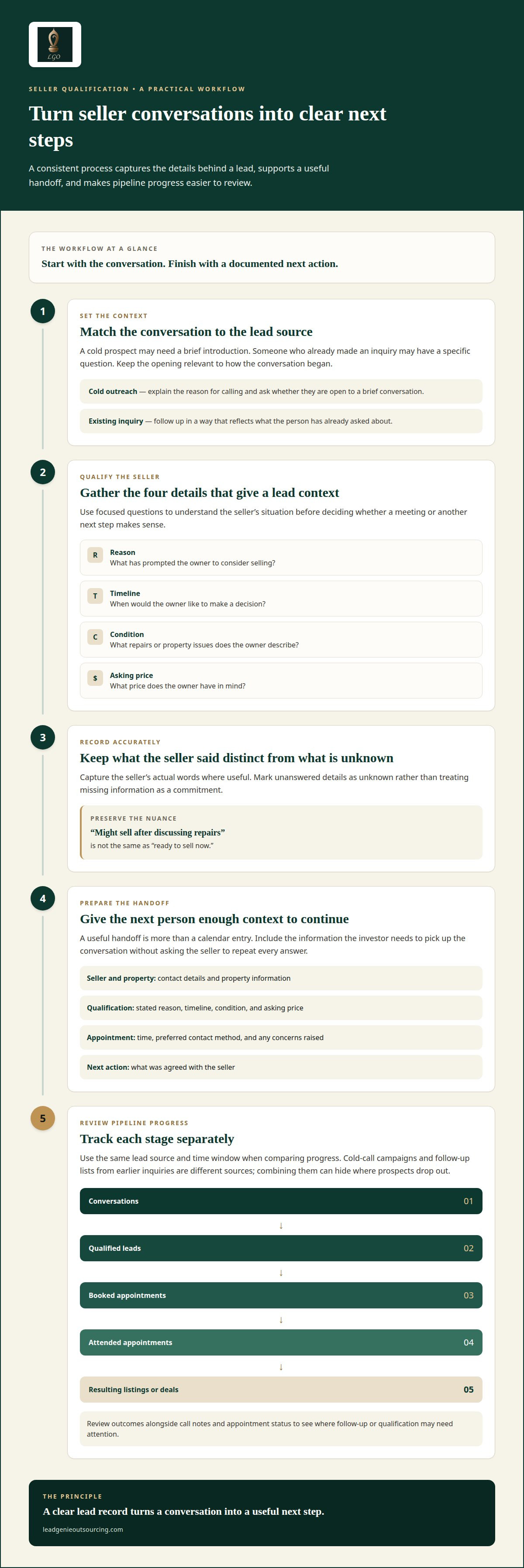
During a seller conversation, the setter can ask why the owner may sell, when they hope to act, and what they know about the property’s condition. Asking price also helps the investor decide whether a follow-up conversation makes sense. Together, these details give the lead context before it moves forward.
- Reason: What has prompted the owner to consider selling?
- Timeline: When would the owner like to make a decision?
- Condition: What repairs or property issues does the owner describe?
- Asking price: What price does the owner have in mind?
Where useful, record the seller’s actual words instead of turning an uncertain answer into a firm claim. “Might sell after discussing repairs” is not the same as “ready to sell now.” That distinction helps the client decide whether to schedule a meeting, follow up later, or keep the lead at an earlier pipeline stage.
Qualification Calls and Lead Transfer
A qualification call gathers seller details and identifies a suitable next step. The investor receiving the lead needs enough context to continue the conversation without asking the seller to repeat every answer.
Before handing off a lead, capture the owner’s contact details, property information, stated motivation, timeline, condition, asking price, and agreed next action. Mark unanswered details as unknown. This prevents the investor from mistaking missing information for a seller’s commitment.
A useful handoff includes the appointment time, the seller’s preferred contact method, and any concerns they raised. If the seller says they need to discuss a move with a family member, for example, that context can guide the next conversation. A clean transfer gives the investor a clear starting point, not just a calendar entry.
Appointment-Setting Conversion Rates
There is no single average conversion rate that applies to every real estate appointment-setting pipeline. Instead, measure the share of qualified appointments that progress to the next stage, using the same lead source and time window.
Track each stage separately: conversations, qualified leads, booked appointments, attended appointments, and resulting listings or deals. Then compare like with like. Cold-call campaigns and follow-up lists from earlier inquiries are different lead sources; combining them can hide where prospects drop out.
Review outcomes alongside call notes and appointment status. If qualified sellers book but don’t attend, examine how the meeting was set and what follow-up took place. If calls produce few qualified leads, review the audience and questions. This makes the rate a useful operating signal, rather than a target borrowed from another pipeline.
What Is a Real Estate Appointment Setting Service?
An appointment-setting service uses an inside sales agent (ISA) to contact prospects and book meetings for agents. In the United States, TCPA, do-not-call, and state requirements can govern calls and texts. Consult a qualified attorney about compliance; calling methods should also reflect lead sources, seller expectations, and agent coverage.
An ISA handles early conversations that might otherwise interrupt an agent’s day. The role can include calling prospects, asking about their needs, noting relevant details, and arranging a meeting with the right agent. This separates outreach from client-facing appointments while keeping both parts of the sales process moving.
An ISA doesn’t replace the agent’s judgment or take over the property discussion. Instead, the ISA helps establish why a prospect is interested and what they want to discuss. A homeowner asking about selling may need an agent to explain next steps, while a buyer may want to discuss listings in a particular area.
The service can support new prospects or existing inquiries. Someone who submits an online form may already know which property or service they’re asking about. A cold prospect may need a brief introduction before deciding whether a meeting makes sense. The caller’s approach should match that starting point.
Cold Calling and Appointment Setting
Cold calling reaches prospects who haven’t started a conversation with the agent; appointment setting turns a suitable conversation into a booked meeting. A clear process lets agents spend less time initiating every contact and more time preparing for active client discussions.
A caller can explain the reason for calling, ask whether the prospect is open to a brief conversation, and listen before proposing a meeting. If the prospect declines, record the outcome accurately. If they show interest, gather the context the agent needs and agree on a clear next step.
Scheduling Agent Meetings
Scheduling matches a prospect’s availability with an agent’s calendar and shares the meeting details. A useful booking has a clear time, purpose, and contact plan.
Before confirming, clarify whether the meeting is by phone, online, or in person. The prospect should know which agent they’ll speak with and what the conversation will cover. A buyer asking about listings, for example, should meet with an agent prepared to discuss that interest, not receive a vague calendar invitation.
Location also affects the handoff. An agent covering several communities may need to know the prospect’s preferred area before accepting a meeting. A remote conversation may work for an early discussion, while a property-related meeting depends on where the prospect and agent can meet. Lead sources also shape the caller’s opening: an inquiry and a cold contact need different context.
For an investor or wholesaler, the same core distinction applies: an ISA creates and organizes conversations, while the principal handles the decision-making discussion. Define what counts as a qualified appointment, which details must be recorded, and how quickly the agent receives the handoff. Clear boundaries prevent callers from implying that an agent has agreed to terms before speaking with the seller.
Appointment scheduling and calendar management
Appointment tools typically combine a CRM, shared calendar, and call notes. To reduce no-shows, confirm the meeting’s purpose, time, location or format, and a clear way to reschedule.
Good calendar management connects each booking to the right agent and lead record. A trained setter can check availability, prevent conflicts, and give the agent the context needed to prepare.
Appointment-Setting Tools and Software
Appointment-setting tools include the CRM and calendar systems used to track prospects, record meeting details, and coordinate agent availability. An accurate record shows who booked the meeting, what the prospect wants, and what the agent needs to do next.
A CRM can store the prospect’s name, contact details, lead source, and conversation notes. A shared calendar shows open slots and booked meetings. If a seller asks for a call about a property, attach that purpose to the appointment instead of burying it in a separate message.
Keep the handoff simple: record the agreed time, meeting format, assigned agent, and useful context in the same workflow. When scheduling is outsourced, setters need clear access rules and a consistent place to enter updates. That way, everyone handling the appointment can see changes.
Reducing No-Shows and Improving Attendance
Reducing no-shows means making an appointment easy to remember, understand, and attend. Clear details help both the prospect and agent know the time, format, and purpose.
Confirm the details while speaking with the prospect. State the day, local time, who they’ll meet, and whether the conversation is by phone, online, or in person. Ask them to confirm. If they need another time, update the calendar rather than holding a slot they can’t attend.
Use a consistent reminder process based on the contact method the prospect agreed to. Each reminder should identify the agent, restate the meeting purpose, and explain how to reschedule. Avoid vague messages such as “appointment tomorrow.” A seller preparing to discuss a property should know exactly what conversation is coming.
Calendar accuracy also depends on timely updates. If a prospect cancels, reopen the slot and notify the agent. If the agent becomes unavailable, contact the prospect and offer another time. For teams working across areas, confirm the local time zone before saving the booking; otherwise, people may interpret the same calendar entry differently.
Review missed meetings using the record: Was the time confirmed? Was the format clear? Did the prospect ask to reschedule? The answers point to the process step that needs attention. Keep the appointment, notes, and follow-up status together so a missed meeting doesn’t disappear from view.
Cold calling and warm-lead follow-up
Cold calls start conversations with prospects who haven’t contacted your business. Warm-lead follow-up continues conversations with people who have already responded, such as homeowners who submitted an inquiry. The two approaches need different openings, but both need a recorded next step.
For cold outreach, explain the call’s purpose and start with an easy question. A wholesaler might introduce the property-related reason for calling, then ask whether the owner would consider discussing a sale. If the person isn’t interested, record that response. If they’re open to talking, ask what prompted their interest before suggesting an appointment.
Warm leads need context, not another generic pitch. Refer to the action that brought the prospect into the pipeline, such as a property inquiry or request for information. Then ask whether their plans have changed and what they need next. A homeowner who requested a follow-up may now be ready to discuss timing or may need another conversation later.
- Cold prospect: Introduce the reason for calling, ask permission to continue, and listen for interest.
- Warm prospect: Refer to the earlier inquiry, confirm current interest, and agree on the next step.
- Not ready: Record the response and follow-up preference instead of treating interest as an appointment.
Each follow-up call should add useful information. If a seller wants to handle repairs before discussing a sale, record that and set a relevant next action. If they ask to speak later, note their preferred timing. The next caller can pick up where the last conversation ended instead of making the seller start over.
An in-house caller requires the business to manage prospecting, training, call review, and lead records. An agency can provide a separate calling operation, but the investor still needs clear qualification criteria and a reliable handoff. Compare options based on who owns call notes, follow-up tasks, and appointment details, not just call volume.
Keep the script flexible. Use a short opening, one question at a time, and a clear close. For example, ask whether the owner is considering a sale, listen, then offer a meeting only if the conversation supports it. A useful real estate cold-calling guide can help shape that call flow.
Calls and texts also need a compliance process. Consult a qualified attorney about TCPA and do-not-call requirements before launching outreach. Make approved contact rules, lead sources, and opt-out requests visible to callers so they follow the same process when a prospect asks not to be contacted.
What are the best real estate appointment-setting strategies and scripts?
A strong call flow gives the seller room to answer before moving toward a clear next step. For investors and wholesalers, the aim is a useful conversation, not a forced booking.
Start with a plain introduction and a specific reason for calling. Identify yourself, explain why you’re reaching out, and ask whether the owner is open to a brief conversation. For example: “Hi, this is Alex. I’m calling about the property on Oak Street. Would you consider discussing a sale?” Keep the opening direct and let the seller respond.
Ask one question at a time. “What has you thinking about selling?” can reveal the owner’s motivation. When the conversation supports it, ask about timing, property condition, and asking price. Listen carefully, and don’t turn “maybe later” into “ready now” in your notes.
- Open: Give your name and the property-related reason for the call.
- Explore: Ask what prompted the seller to consider a sale.
- Clarify: Ask about timing, condition, and price without rushing.
- Close: Offer a meeting if the seller’s interest and next step fit.
Warm leads need a different opening from cold prospects. Refer to the seller’s earlier inquiry, then ask whether they still want to discuss the property. For example: “You asked about selling your home. Is that still something you’re considering?” This connects the call to a real action and tells the owner why you’re calling.
Let the seller’s answer guide your next question. If they’re unsure about repairs, ask what work concerns them most. If they need time to decide, ask what would help them move forward. A useful script provides a path through the conversation, but callers should respond to the seller rather than read every line unchanged.
Before proposing an appointment, summarize the seller’s stated need: “You’re considering a sale and want to discuss the property’s condition. Would a conversation with our team help?” This gives the owner a chance to correct the details. If they agree, confirm the meeting’s purpose and preferred time. If they decline, record the outcome and follow their contact preferences.
Review calls for clear openings, relevant questions, accurate notes, and a defined next step. A structured calling workflow can help keep those parts connected. If sellers disengage after the same question, adjust that part of the script. A four-pillar seller qualification approach can help organize the details callers gather.
Lead Genie Outsourcing: Cold calling for real estate wholesalers
Lead Genie Outsourcing provides cold calling for real estate wholesalers and investors who need steady seller outreach. Dedicated callers work 40 hours a week, and each caller gets 10,000 skip-traced, scrubbed records.
Calls qualify sellers on four pillars: reason to sell, timeline, condition, and asking price. The call recording gives you a way to review the conversation and its context. The guarantee is 30 qualified seller appointments a month, or dialing continues free until the target is met.
The LGO CRM is free for 30 days, giving you a place to manage leads and appointments. This setup can fit investors who need consistent calling and a clear handoff into their pipeline.
Book a free 30-minute call with Lead Genie Outsourcing to discuss your seller outreach.
Put Your Seller Pipeline in Motion
Decide who owns each seller conversation, from first contact through the booked meeting. Set a clear handoff, keep call notes connected to the lead, and review where prospects pause. These steps make real estate appointment setting part of your acquisition process, not a disconnected calendar task.
Lead Genie Outsourcing supports wholesalers and investors with cold calling, alongside the LGO CRM. That can suit operators who want help creating seller conversations while keeping lead management in view. Your team stays responsible for deciding which opportunities fit its buying criteria and how to handle each seller discussion.
Bring your current outreach process and the bottleneck you want to fix. A focused conversation can help clarify whether calling support fits your workflow. Book a free 30-minute call with Lead Genie Outsourcing, and take the next step with a clearer plan.
Frequently Asked Questions
What does appointment setting mean in real estate?
Appointment setting arranges a conversation between a prospect and the person who can address their next need. The setter clarifies the prospect’s purpose and routes the meeting appropriately. A homeowner exploring a sale may need to speak with an investor, while a buyer asking about available homes needs an agent. The booking sets up the conversation; it doesn’t make the transaction decision.
How does the appointment process work?
A prospect enters the pipeline, a caller or team member makes contact, and the next action is recorded. Someone asking about a vacant property, for example, might prefer a phone conversation first. The person handling the lead confirms that preference and assigns the conversation to the right teammate. If the prospect isn’t ready to meet, record a follow-up action instead.
How do real estate agents generate and qualify leads for appointments?
Agents can start conversations through referrals, advertising inquiries, or direct outreach. To qualify an inquiry, first identify what the person wants, then decide who should handle it. A buyer asking about homes and a property owner considering a sale have different needs. Recording the lead source and request helps route each prospect to a relevant conversation.
How do in-house appointment setters compare with outsourced services?
An in-house setter works within the team and can learn its routines and handoff preferences. An outsourced service provides calling support without adding an internal role to manage. Choose based on how your team wants to oversee outreach, qualification standards, lead records, and agent handoffs. A team with an established caller may value direct control, while another may prefer external calling support.
How do appointment-setting methods vary by real estate market and location?
Calling methods should reflect lead sources, seller expectations, and agent coverage. Tailor the opening to whether the prospect made an inquiry or is a cold contact, and confirm their preferred area and a suitable meeting format or location.