

Start with recorded motivated seller leads tied to a clear signal, such as pre-foreclosure, vacancy, or absentee ownership. Then assess the lead by the seller’s actual reason for selling, timeline, property condition, and asking price, not by the list label alone. A recording helps you hear whether those details point to a real opportunity.
You need leads that can move deals forward, not just a pile of names to chase. A distress tag doesn’t prove an owner wants to sell, and contact data alone won’t tell you whether the seller’s expectations fit your deal. This guide explains how to compare lead sources, distinguish active from passive seller signals, weigh buying leads against generating them, and screen prospects for wholesaling. You’ll get a practical way to assess each source and decide which conversations deserve your time.
Key Takeaways
- Compare lead sources by the seller signals behind the list, not just the list label.
- Separate owners already taking steps to sell from those who may need a reason and the right timing to act.
- Weigh buying leads against generating conversations based on the control and follow-up your operation can handle.
- Filter prospects by reason to sell, timeline, property condition, and asking price before deciding which conversations to pursue.
- Use call recordings to review what sellers said and judge whether the lead details support a real opportunity.
1. How to compare lead sources and underlying seller signals
Compare each seller lead by its source, seller signals, contact details, and recorded conversation. A distressed-property tag may indicate a possible reason to sell, but it doesn’t tell you the owner’s timeline or asking price. Treat the label as a starting point, then use the conversation to assess whether there’s a real opportunity.
In the United States, recorded motivated seller leads come from data and list providers, lead marketplaces, and calling services that record seller conversations. These sources differ in how they build lists, qualify prospects, and deliver records. Ask what each lead includes: property address, owner name, phone number, list source, and details from any conversation. A phone number without seller context gives you less to assess.
Self-serve list builders let investors choose filters, such as absentee ownership or delinquent taxes, and create lists for their own calling. Pay-per-lead services charge for a delivered prospect or qualified conversation, depending on their model. Building your own list gives you more control over targeting and follow-up. Buying leads can reduce list-building work, but their usefulness depends on how the service qualifies and delivers them.
Compare provider pricing by what the payment covers, not just the headline figure. Check whether it includes list access, skip tracing, calling, recorded audio, or a live transfer. Coverage matters too: confirm which states or markets are served and whether records are limited by territory. Then review distribution terms. A shared lead may reach multiple buyers, while an exclusive lead is assigned to one buyer. These terms affect how quickly you need to follow up and how you track competing contact.
Compare software based on the work you need it to do. A list builder filters and organizes records; a CRM tracks calls, follow-up, and outcomes; a marketplace delivers prospects. For example, check whether a tool stores recordings alongside seller details or leaves you to manage audio separately. A recording lets you hear the seller’s own words instead of relying only on a brief status label.
A recorded lead differs from a live transfer because the recording captures an earlier conversation for review, while a live transfer connects the seller and investor during the call. Other real estate leads may include only listing or ownership data, without a recorded seller discussion. Compare each type by how much context it provides before your next contact.
To assess quality and return, track the source, contact accuracy, qualified conversations, appointments, and resulting deals. Compare each source’s cost with its outcomes over the same period. Calling leads and recording conversations can involve federal and state rules. The Federal Communications Commission says the TCPA governs automated calls and marketing texts to consumers. Consult your attorney about recording and contact requirements before outreach.
2. Active and passive motivated sellers
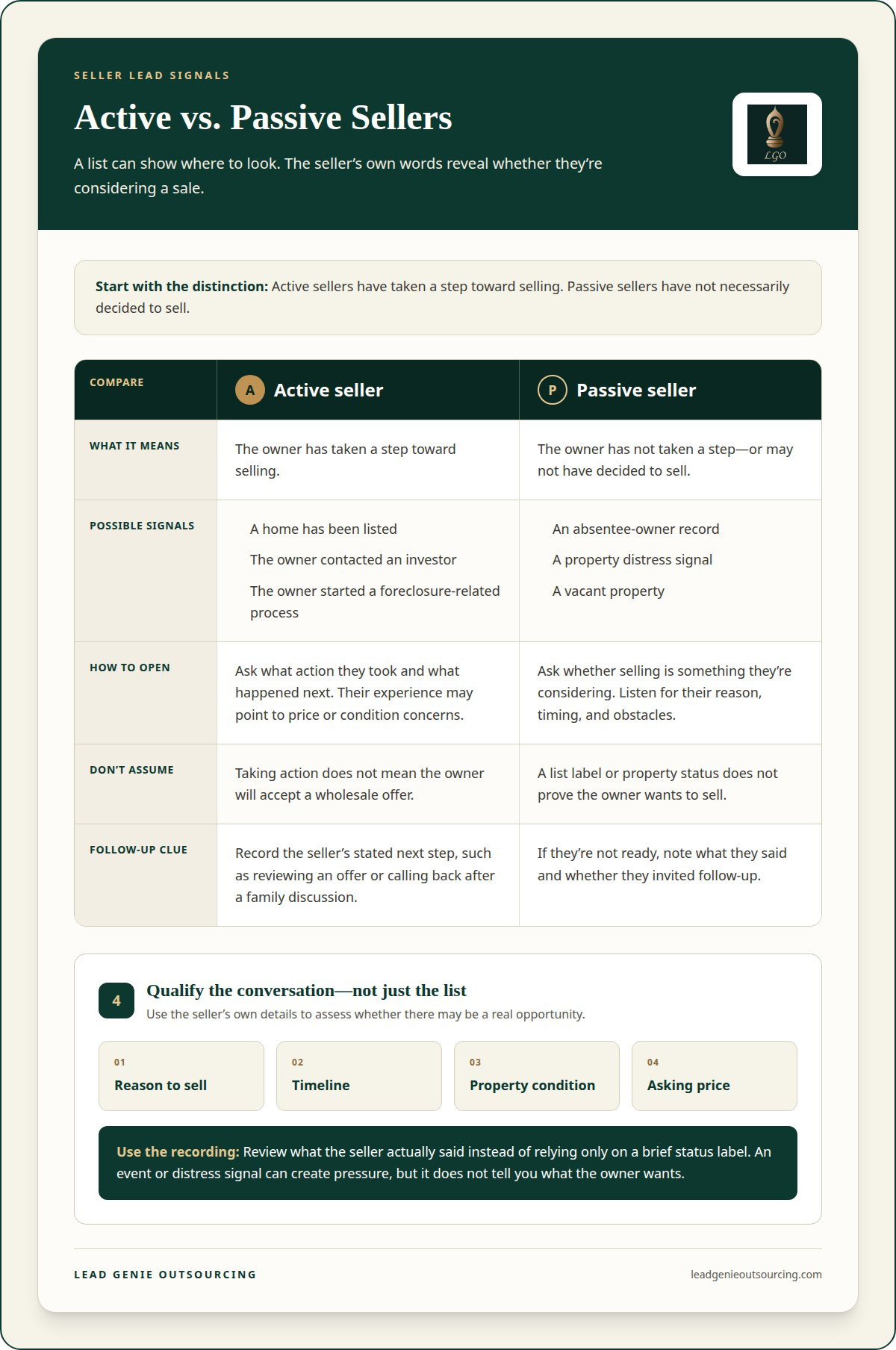
An active seller has taken a step toward selling; a passive seller hasn’t. That distinction shapes the first conversation. An active owner may have listed a home, contacted an investor, or started a foreclosure-related process. A passive owner may appear on a property list without having decided to sell. A lead source shows where to look for prospects, not what stage each owner has reached.
With an active seller, ask what action they’ve taken and what happened next. A home that didn’t sell after listing, for example, may point to an issue with price or condition. An owner who contacted an investor may already have terms in mind. Build your script around the seller’s actions, but don’t assume those actions mean they’ll accept a wholesale offer.
Passive sellers call for a different opening. An absentee-owner record or distress signal doesn’t prove intent to sell. Ask whether selling is something they’re considering, then listen for their reason, timeline, and obstacles. For example, an owner with a vacant house may want to keep it, rent it, or sell it. The property’s status alone can’t answer that.
Events such as divorce, an inherited property, or foreclosure can create pressure, but they don’t tell you what the owner wants. Don’t open with a sensitive label from a list. Ask a neutral question about the property and let the owner explain their situation. If they’re not ready, note what they said and whether they invited follow-up. Don’t turn a personal event into an assumption about selling.
Inbound leads and outbound calls from a list reveal intent in different ways. An owner who reaches out has initiated contact, but still needs to be qualified. An outbound prospect may not know why you’re calling or may not be considering a sale. In either case, listen for the owner’s own words: a specific reason, a workable timeline, willingness to discuss condition, and a clear price expectation.
Use call notes or recordings to classify each conversation as active, passive, or not currently interested. Capture the seller’s stated next step, such as reviewing an offer or calling back after a family discussion. That record helps the next caller avoid restarting the conversation or treating an old signal as current. A seller qualification framework can help organize those details without confusing distress with intent.
Keep the distinction practical: active sellers have taken steps, while passive sellers may need time or a reason to act. Match follow-up to the conversation. A seller who asks you to call after reviewing paperwork needs a different follow-up than an owner who says they aren’t considering a sale.
3. Buying leads versus generating them
Buying leads gives a real estate operation a list to work; generating leads builds conversations through its own outreach. A county list filtered for vacant properties, for example, can provide a defined starting pool. Calling owners directly takes more setup, but conversations can reveal details property data misses, including the owner’s plans, timing, and interest in selling.
Risks of buying recorded motivated seller leads include outdated records, wrong phone numbers, shared prospects, and recordings that don’t support the lead label. A distressed property or apparent equity position doesn’t prove intent to sell. Before deciding how much follow-up a lead deserves, review its source, recording date, the seller’s actual statements, and the distribution terms.
Purchased lists can narrow your search using signals such as absentee ownership or vacancy. Skip tracing may add a phone number, but it doesn’t establish that the owner wants to sell. Before paying, match the filters to your buy box, target county, and calling capacity. A broad list can mean more dialing without more conversations that fit your acquisition criteria.
Generating leads gives you more control. A wholesaler can use direct mail, outbound calling, referrals, or inbound marketing, then adjust the message based on responses. Each channel creates a different path to a seller conversation. An inbound owner, for example, has initiated contact, while someone reached through a property list may need context before discussing a sale.
Compare the approaches by how well they fit your operation. Buying may suit a team that can call promptly and needs a defined list. Generating may suit an investor who wants to test messaging, build local recognition, or focus on a specific county. Neither approach replaces qualification. Ask about reason, timeline, condition, and asking price before treating a prospect as a viable opportunity.
Track the source and outcome in the same system. Note whether a lead came from a purchased list, a mail response, or an inbound call. Then record contact success, seller conversations, appointments, and deals. This shows where follow-up time goes and which sources produce prospects your team can work. Compare sources over the same period, using your own costs and outcomes.
For example, a small team can test one purchased list against one self-generated campaign in separate CRM tags. Use the same qualification standards and log each response. Review recordings to see whether sellers discussed a real timeline or only answered a brief question. A consistent process makes the comparison useful, rather than mistaking a busy phone line for a productive campaign. A real estate cold-calling approach can also help frame how outbound conversations fit into lead generation.
5. Filtering seller leads
Recorded conversations help you assess a seller lead based on facts, not a distress label. Start with the owner’s stated reason for selling, timeline, property condition, and asking price. Then compare those details with your buy box. A foreclosure filing or delinquent-tax signal may explain why a record entered a list, but neither proves the owner wants an offer.
To move recorded seller leads toward a deal, qualify the owner’s situation, assess the property against your criteria, and agree on a clear next step. Use the recording to capture what the seller said, then follow up based on their timeline or requested action.
Listen for specific intent. “I might sell someday” differs from “I need to sell after the property is cleared.” A traditional acquisitions manager may use a 20-30 minute call to qualify a motivated seller. The recording lets you review whether the conversation covered the decision points or left gaps for follow-up.
Price expectations need context. An owner asking for only a 5% discount from the home’s perceived perfect-condition value may have little urgency to sell. An owner willing to consider a 20% discount or more may show stronger motivation, but the discount alone doesn’t establish a workable deal. Compare the seller’s price with your repair estimate and target numbers.
Property condition also shapes the next step. If a seller describes a vacant home with roof damage, ask what repairs they know about and whether someone can provide access. If the recording says only “needs work,” continue qualifying rather than treating that phrase as a repair scope. Distinguish confirmed details from assumptions in your notes.
Use a simple lead status after each review:
- Qualified: The seller states a reason, timeline, condition details, and asking price that warrant deal analysis.
- Follow-up: The owner is open to selling but needs time or has an unanswered question.
- Not a fit: The seller’s terms or situation don’t match your buying criteria.
For example, an owner facing delinquent taxes may discuss selling but ask for time to speak with family. Record the request and schedule follow-up around the seller’s stated next step. A tax signal isn’t permission to push for an immediate agreement.
Before making an offer, compare the recording with the property record and your deal analysis. Confirm that the seller’s stated price, condition, and timing are recorded accurately. A call recording supports better decisions; it doesn’t replace property review or a clear agreement on terms. Keep the lead active only while there’s a practical next step.
5. How are recorded seller leads generated and verified?
A recorded seller lead brings together a source, a property record, and a real conversation. A list may draw on public records or property data, or come from an owner’s response to outreach. The source explains why the property entered your pipeline. A call tests whether the owner is open to discussing a sale, and the recording preserves their answers for review.
Lead generation follows a clear sequence. First, define a market and property profile, such as vacant homes in a target county. Next, build or obtain records that match your filters. Then match records with contact details and call the owners. List criteria determine who gets called, so broad filters can lead to conversations with owners who have no current plans to sell.
Verification happens at several stages. Confirm that the conversation concerns the listed property and that the person reached can speak for the ownership. Compare the seller’s stated reason, timeline, condition, and asking price with the lead notes. If the notes say “ready to sell” but the recording only shows the owner agreed to hear more, correct the status. The recording should support the label.
Listen for the seller’s exact words, not just the caller’s summary. An owner who says, “I may sell after I move,” has given a condition and a possible timeline, not a firm commitment. Note what needs follow-up. If the owner mentions repairs, record the details they provide without turning them into an estimate. The recording documents the conversation; it doesn’t prove the property’s condition or ownership.
A practical review can compare each recording against a short set of fields:
- Identity and property: Does the person discuss the address attached to the lead?
- Intent: Did the owner say they are considering selling, or only answer a general question?
- Terms: Are timing, condition, and price expectations captured in the notes?
- Next step: Did the owner agree to a follow-up, offer review, or another action?
For example, review a lead marked “vacant and motivated” if the owner says a tenant still lives in the home and selling is only a future possibility. Update the record to match the call. That way, the next person won’t mistake an old list signal for a confirmed decision to sell.
Keep the recording with the lead record, along with its source and review outcome. This creates a traceable path from list selection to seller conversation to qualification. It also helps managers spot recurring gaps, such as callers skipping price expectations or failing to clarify who owns the property. Consistent review makes recorded seller leads easier to compare and route for follow-up.
Want a calling process that captures seller conversations for review? See how the calling process works.
Lead Genie Outsourcing
Lead Genie Outsourcing helps real estate investors and wholesalers build seller conversations through dedicated cold calling. Each caller works 40 hours a week and receives skip-traced, scrubbed records to call. Leads are qualified on four pillars: reason to sell, timeline, property condition, and asking price. The call recording gives you a direct way to review what the seller said and assess whether the lead fits your criteria.
This approach fits investors who want consistent outreach and clearer visibility into seller conversations, without managing every call themselves. The guarantee is 30 qualified seller appointments a month, or dialing continues free until that target is met. Use the recorded details to guide your next step, whether that means discussing an offer or following up later.
Make the Next Seller Conversation Count
Make recorded motivated seller leads part of a working process, not just a folder of audio files. Decide who reviews each call, how your team records seller intent, and what triggers the next follow-up. Apply those steps consistently so each new conversation can improve how you screen prospects and manage your pipeline.
A useful next step is to map your outreach from first contact through follow-up, then identify where calls stall or seller details get lost. Lead Genie Outsourcing provides cold calling and the LGO CRM for real estate investors and wholesalers, helping teams build and manage seller conversations.
Book a free 30-minute call with Lead Genie Outsourcing and discuss a process that fits your operation. Start with one clear improvement, then build from there.
Frequently Asked Questions
Which motivated seller lists are best for wholesalers?
Choose lists that match your buy box and the kinds of properties you can close on. A wholesaler targeting vacant houses that need repairs, for example, might start with vacancy and condition signals, then compare ownership and contact details. Foreclosure or delinquent-tax records may point to a possible need, but those signals don’t establish intent. The best fit is a list your team can work and qualify consistently.
How does conversational seller qualification work?
A strong conversation clarifies the seller’s needs and next step. The caller asks open questions, listens without rushing, and follows up when an answer is vague. “You mentioned moving. What timing are you working toward?” can help distinguish a near-term plan from a general thought. The caller notes the seller’s own answers, identifies missing details, and records whether follow-up or an offer discussion makes sense.
How fresh are the records in a list I am considering?
Record freshness depends on when its source fields were collected and how often they’re updated. Ownership data, property status, and phone details may each have different update dates. A recent phone match, for example, doesn’t mean the property’s vacancy status was checked at the same time. Assess freshness field by field: the source date and last update for each key detail matter more than a general label for the entire list.
What is a motivated seller in real estate?
A motivated seller is a property owner with a real reason to consider selling. That reason might involve a move, an inherited home, upkeep, or another change in circumstances. Motivation describes the owner’s situation, not just the property’s condition or a public-record flag. An owner with a vacant home, for example, may prefer to rent it. The conversation must establish whether selling is genuinely an option.
What's the difference between distressed home seller leads and motivated seller leads?
Distressed home seller leads point to a property or owner facing possible hardship; motivated seller leads indicate an owner willing to discuss a sale. The terms can overlap, but they aren’t interchangeable. A home needing visible repairs may be distressed even if the owner doesn’t want to sell. An owner relocating for work may be motivated even if the home is in good condition. The owner’s stated plans distinguish a signal from intent to sell.
What do recorded motivated seller leads cost per lead?
Cost depends on what a lead includes, such as contact data, qualification, recorded audio, and exclusivity. A raw record and a seller conversation with reviewed details aren’t equivalent deliverables. With a calling service, compare the monthly plan price with what’s included, such as caller time, list preparation, lead review, and CRM access. Assess the deliverables and terms before comparing costs.
What questions should a recorded motivated seller lead call include?
Ask questions that reveal the owner’s reason, timing, property condition, and price expectations. Keep the conversation natural: “What has you considering a sale?” “What timing would work for you?” “What repairs should a buyer know about?” and “What price do you have in mind?” Clarify who else is involved in the decision and agree on a next step. Avoid leading questions that pressure the owner toward answers they haven’t given.
What federal and state laws apply to recording seller lead calls and contacting leads?
Calling leads and recording conversations can involve federal and state rules. The TCPA governs automated calls and marketing texts to consumers. Consult your attorney about recording and contact requirements before outreach.